
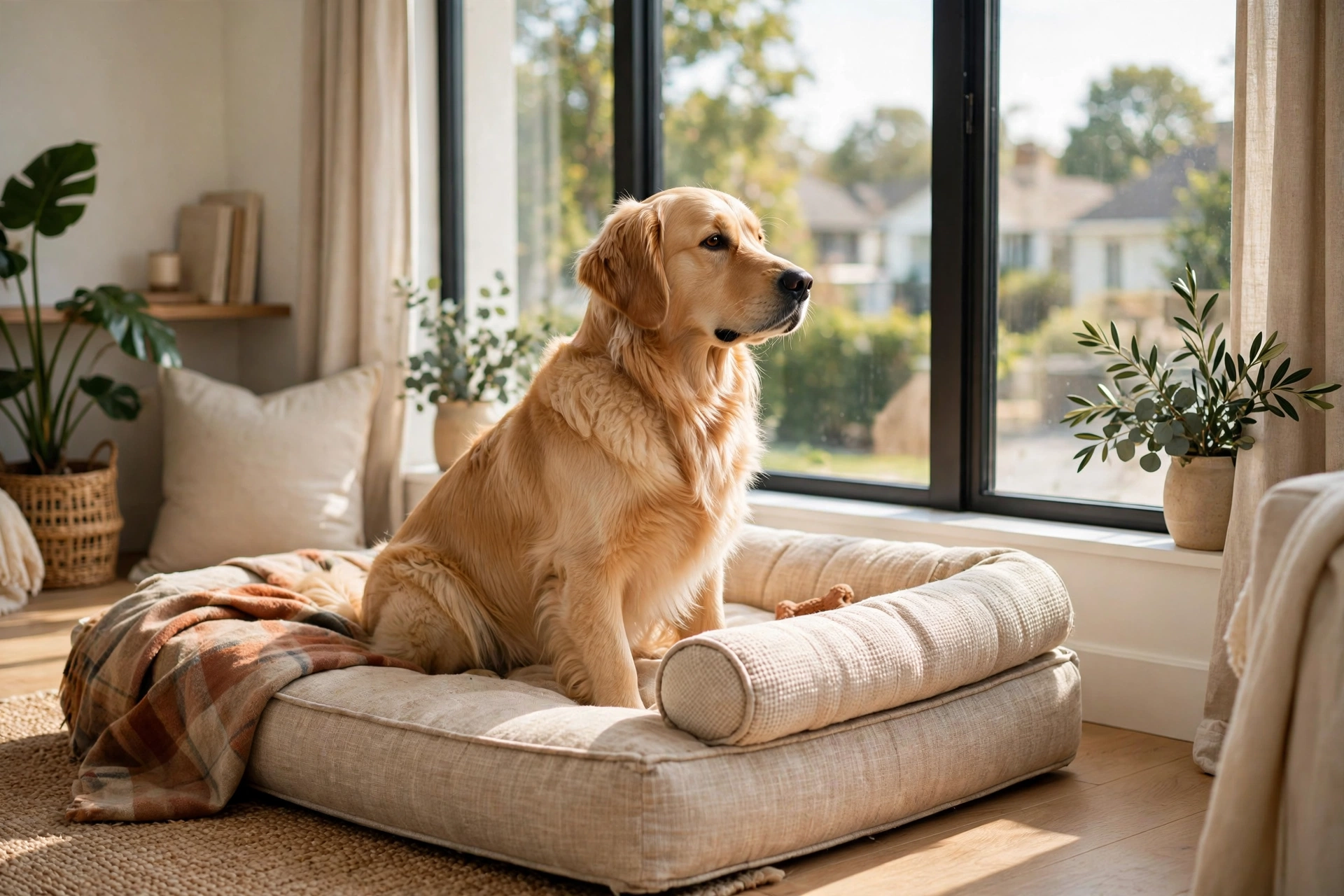

Every dog owner asks this question at some point — usually before the first full workday, a wedding invitation, or a puppy’s first week at home. How long can a dog be left alone?
There is no single number that fits every dog. A confident adult who has had a long morning walk and practice being alone is very different from a ten-week-old puppy or an elderly dog who needs medication and frequent trips outside. Age, bladder control, health, breed, energy level and past experience all change the answer. This guide gives a clear starting point by life stage, explains what can go wrong when a dog is left too long, and shows how to build up alone time gradually.
The Quick Answer
How long can a dog be left alone? For most healthy adult dogs, four to six hours is a sensible, comfortable stretch alone at home. Some well-adjusted adults used to a routine can manage up to eight hours on an occasional workday, but only if they are exercised and toileted before you leave, have water and something safe to do, and get proper exercise and attention when you return. Eight hours should be the exception you plan around, not the daily default.
Puppies need far less — roughly one hour per month of age as a bladder guide in the early months, and even then they need toilet breaks, meals, play and company. Senior dogs usually need shorter stretches than in their prime, because bladders weaken, joints stiffen and medical needs increase. Remember this rule: plan for four hours, prepare for six, and arrange help for anything longer.
How Long Can a Dog Be Left Alone by Age?
Age is the biggest factor, mostly because it controls the toilet question. A dog who is physically uncomfortable cannot relax, no matter how good the toys are. Use this table as a starting point, then adjust for your dog’s health and behaviour.
| Life stage | Sensible maximum alone | Why |
|---|---|---|
| Puppy, 8–10 weeks | About 1 hour | Tiny bladder; needs feeding, toilet training and social contact |
| Puppy, 3 months | Up to 2 hours, built up slowly | Bladder control still developing; accidents set training back |
| Puppy, 4–5 months | Up to 3 hours | Can hold longer, but still needs breaks, play and reassurance |
| Puppy, 6 months+ | 3–4 hours maximum | Approaching adult control, but energy and chewing peak here |
| Adult dog (1–7 years) | 4–6 hours typical; 8 occasionally with preparation | Mature bladder and, with training, able to settle and sleep |
| Senior dog (7–8 years+) | 2–6 hours, depending on health | More toilet breaks, stiffness, medication and vet needs |
Puppies: the hour-per-month guide — and its limits
The old rule of thumb says a puppy can hold their bladder for roughly one hour per month of age — two hours at two months, three at three, up to about six months. It is useful for toilet planning, but it is often misread as permission to leave a puppy alone that long. It is not the same thing. A three-month-old may physically manage two to three hours, but emotionally they are a baby animal in a new home, and long lonely stretches can teach them that being left is frightening. Fear learned early is harder to undo later.
Keep puppy alone time short and uneventful: pop out, return before crying peaks, and build from minutes, not hours. If you work full-time with a young puppy, you need a rota — partner, family, neighbour or professional puppy visitor — from day one, not as a backup.
Adult dogs: why four to six hours is the standard answer
A healthy adult with an empty bladder, a good walk behind them and practice at being alone will usually spend most of your absence asleep. Four to six hours sits inside most dogs’ toilet comfort zone and inside the window where boredom and loneliness rarely build into stress. Stretching to eight hours asks much more: your dog must hold on, wake, wait, and hold on again without knowing when you will return. Many cope occasionally, especially after a long morning walk, but if your workday plus commute is nine or ten hours away, a dog alone for all of it is not a routine — it is a problem to solve with a midday break.
Senior dogs: the clock runs faster again
Old age shortens the window. Seniors often need the toilet more often, may drink more due to kidney or hormonal conditions, and can be on medication that increases urination. Stiff joints make settling harder, and some older dogs grow anxious when routines change because of pain or cognitive decline. Think two to six hours depending on the individual, and make it easy: a comfortable bed away from draughts, water within reach, non-slip routes to the garden, and a neighbour or sitter check-in on long days. Sudden accidents, night restlessness or new clinginess as you prepare to leave are reasons to see your vet, not to assume it is just old age.
Does Breed, Size or Energy Change the Answer?
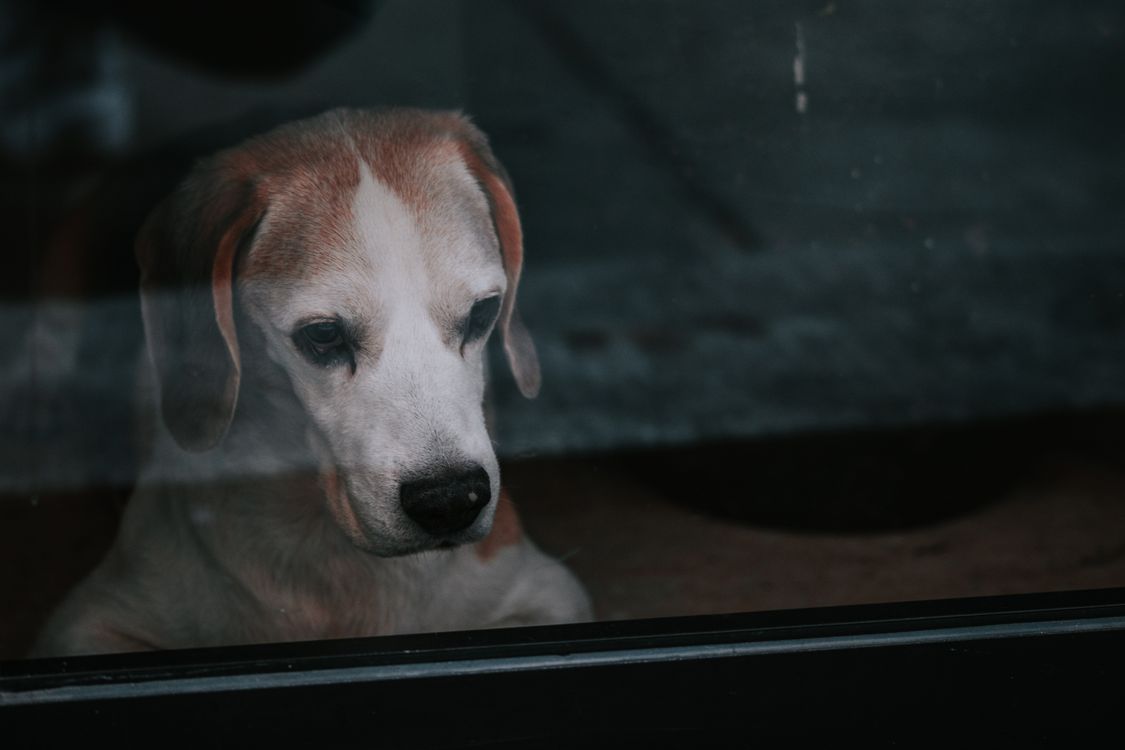
Breed is not a permission slip, but it changes the odds. High-energy working breeds — border collies, springer spaniels, vizslas and many terriers — were bred to be active with people for much of the day. Understimulated, they spend that energy themselves: chewing skirting boards, opening cupboards, redecorating the sofa. They may physically manage six hours, but mentally they need the day broken up.
Steadier, lower-energy adults, such as greyhounds, often settle better — provided they are adult, healthy and used to being alone. Small dogs are not automatically easier: many companion breeds were bred for constant human company and can find isolation harder, and toy breeds can have small bladders and big opinions about being left. Temperament beats the breed label. A dog who follows you room to room or pants when you pick up your keys may struggle at two hours while another sleeps through six. If you are choosing a dog for a working lifestyle, be honest with breeders and rescues about your hours.
What Actually Happens When a Dog Is Left Too Long?
Being left too long produces a chain: physical discomfort first, then stress, then behaviour owners often misread as naughtiness or spite. A bored, under-stimulated dog may also develop habits such as eating poop, which is why stopping a dog from eating poop often starts with tackling the boredom behind it.
- Toilet accidents. A desperate dog will eventually go indoors. It is not revenge, and repeatedly soiling their own living space is distressing for an animal whose instinct is to keep the den clean.
- Stress signs. Panting, pacing, drooling, trembling, yawning, lip-licking, refusing food or ignoring a favourite chew, and restlessness when you pick up keys or put on shoes.
- Vocal behaviour. Barking, whining or howling, often starting within minutes of you leaving — usually the first thing neighbours notice and owners miss.
- Destructive behaviour. Chewing door frames, scratching at exits, digging at carpets and destroying furniture are usually attempts to get out or to cope, and dogs injure teeth, paws and nails doing it.
- Self-injury. In severe cases, dogs break teeth on crates or tear nails on doors trying to follow their owner.
This distress has a name: separation-related behaviour. The RSPCA’s guidance on separation-related behaviour notes that many dogs find being left harder than owners realise, and many show no obvious signs while the owner is home — which is why a camera check (below) is so useful. Punishing a dog on your return makes it worse: they cannot connect your anger with something done hours ago, so they learn to dread both your leaving and your return. The RSPCA also advises not leaving a dog for more than four hours at a time, and far less for puppies.
How to Build Up Alone Time: A Simple Training Plan
Dogs are not born knowing being alone is safe; they learn it from how the experience feels. The aim is not a dog who tolerates misery quietly, but one who learns that alone time predicts rest and treats, not panic.
- Start ridiculously small. Step into another room, close the door for a few seconds, and return before your dog gets up. Repeat until boring.
- Break down the leaving routine. Pick up keys, put on shoes or a coat, then sit down again. Repeat often so departure cues stop predicting disaster.
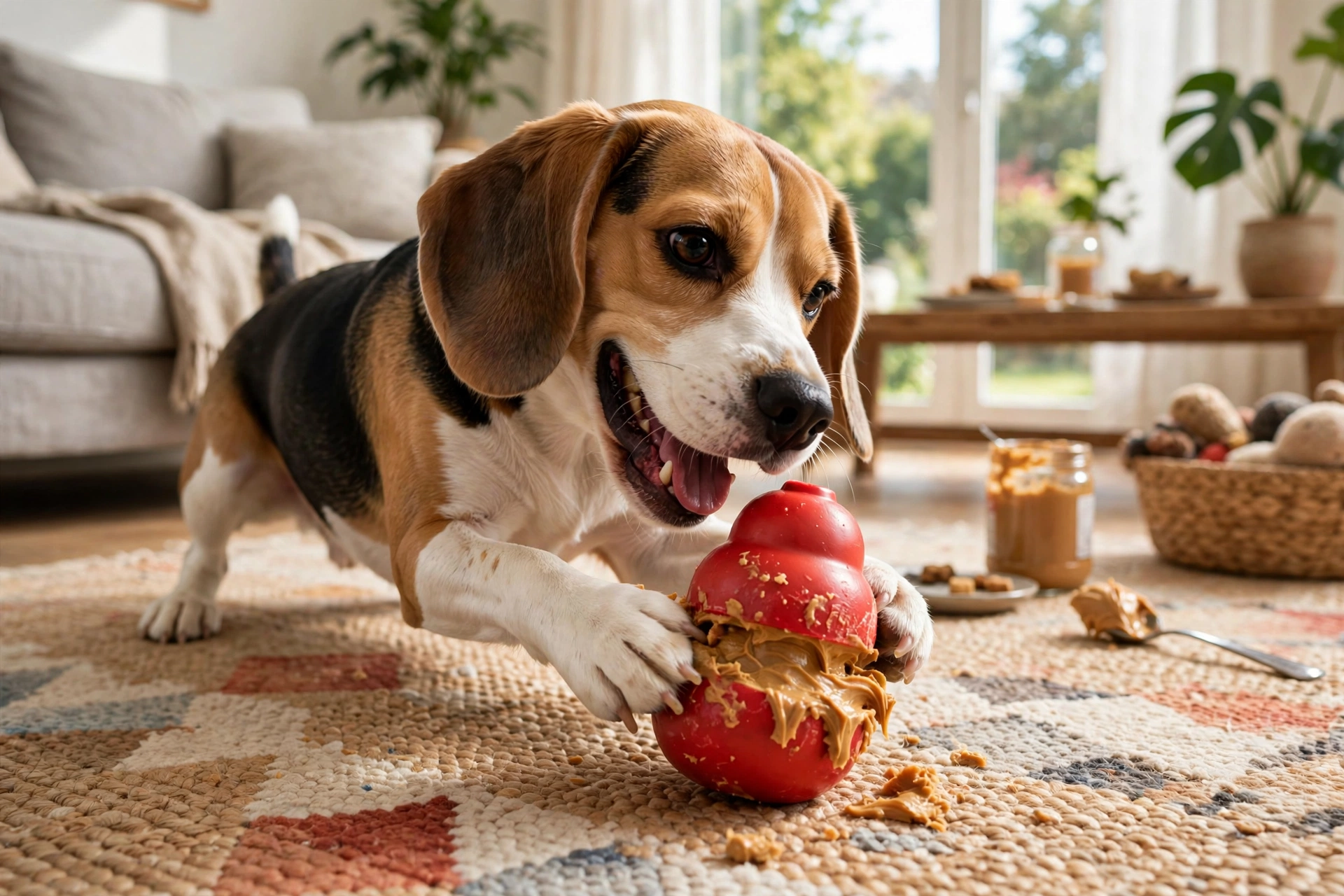
- Leave something worth staying for. A long-lasting chew, stuffed food toy or lick mat as you step out. Practise with these while you are home first, and deduct the food from the daily allowance.
- Grow the clock gradually. Seconds, then one minute, five, fifteen, thirty — varying the lengths so your dog does not learn every absence is longer. Only move on when the current step looks relaxed.
- Go out for real, briefly. Take the bin out, walk around the block, visit a nearby shop. Keep departures and arrivals low-key: no long goodbyes, no big fuss on return.
- Practise at different times. Dogs learn patterns. Mix practice into evenings and weekends, not just weekday mornings.
If your dog panics at the smallest step, do not push on and do not let them cry it out — distress rehearsed daily becomes habit, not a lesson. Ask your vet to rule out pain or illness and to refer you to a qualified clinical animal behaviourist.
Practical Help for Workdays and Long Days Out
How long can a dog be left alone on a workday? If your working day is longer than your dog’s comfortable window — for most full-time workers it is — the answer is not a tougher dog. It is a broken-up day.
- Midday dog walker or sitter — often the most effective fix. Choose someone insured who walks small groups and actually lets your dog toilet, sniff and stretch. A proper walk resets the clock.
- Doggy daycare. Brilliant for sociable dogs, exhausting for dogs who are not. Check licensing and staff ratios, and do a trial half-day first.
- Family, friends and neighbours. A trusted person popping in for a toilet break, a play and fresh water covers the gap. Put the arrangement — and a backup — in writing so it survives holidays and sick days.
- A pet camera. A simple camera tells the truth about alone time: asleep, or pacing? Test it on short absences before assuming all is well. If you use smart-home kit, If you use smart-home kit, a camera can help you check in — but remember, a camera monitors; it does not keep a dog company.
- Puzzle toys and chews. Food puzzles, snuffle mats and safe long-lasting chews occupy the first, hardest part of an absence. Rotate toys to keep them interesting, and avoid anything that splinters or can be swallowed in chunks unsupervised.
- Your departure routine. Walk, toilet, feed if it fits your schedule, then settle and leave calmly about half an hour after exercise. Dog-proof before you go — doors and windows shut, hazards out of reach, and check gates and fences if your dog can reach those areas.
Plan, too, for the day everything goes wrong — failed trains, overrunning meetings, a broken-down car. Keep an emergency contact who can get to your dog, with a key, your vet’s number and feeding notes, just as you would for any family member. Our roundup of family emergency examples is a useful prompt for what belongs in that plan.
What the Law and Welfare Guidance Say
In the UK, no specific law sets a maximum number of hours a dog may be left alone. Under the Animal Welfare Act 2006, owners must meet their dog’s welfare needs — suitable environment, water, and the chance to behave normally — and must not cause unnecessary suffering. Leaving a dog so long that it is distressed, soils itself or injures itself trying to escape can become a welfare problem even without a stopwatch offence. Charity guidance fills in the practical gap: as noted above, the RSPCA advises avoiding leaving a dog for more than four hours at a time, far less for puppies, and breaking up longer days with sitters and walkers. Treat four hours as the point where most dogs need a break, not a line to skirt.
FAQs
Is it OK to leave my dog alone for 8 hours, 5 days a week?
For most dogs, every weekday without a break is too much. An occasional prepared eight-hour day is different from a permanent routine. If you work full-time, budget for a lunchtime walker or sitter as part of the cost of having a dog.
How long can a dog be left alone at most?
Six hours suits many healthy adults; eight hours is the absolute most for a well-prepared, well-adjusted dog, and only occasionally — many welfare organisations advise four hours as the routine limit. Beyond that, arrange a visit. Overnight alone — or days alone with food left down — is never acceptable.
Can I leave a puppy alone while I am at work?
Not for a full workday in the first months. Puppies need toilet breaks, meals, play and company every one to three hours depending on age. Use holiday, flexible working, family help or puppy visits until your puppy is older and trained to settle.
What happens if a dog is left alone for 10 or 12 hours?
Expect desperation, not disobedience: toilet accidents, barking, stress and possibly destructive escape attempts. Repeatedly leaving a dog that long can create lasting separation-related behaviour and real welfare harm.
Which dogs cope best with being left alone?
Calm, healthy, well-trained adult dogs with moderate energy needs. Individual temperament matters more than breed, size or age alone — high-energy working breeds and clingy companion breeds usually need the day broken up.
Should I get a second dog so mine is not lonely?
Only if you want two dogs. A companion sometimes helps, but you may simply get two bored, vocal dogs at double the cost. Fix your first dog’s alone-time experience before adding a second.
The Bottom Line
So, how long can a dog be left alone? Plan around four hours, prepare carefully for up to six, treat eight as an occasional maximum for a well-adjusted adult — and never leave a puppy, senior or anxious dog to face a full working day unaided. Build alone time in tiny, successful steps, check what your dog actually does when you are out, and buy help for the gap between your schedule and your dog’s needs. A dog who can rest while you are gone is not a neglected dog. A dog who spends the day in quiet panic is asking you, very clearly, to change the plan.