

Sammying is one of the most important yet least talked about steps in leather making. If you searched sammying and want to know what it means, how the process works, and why tanneries cannot skip it, this guide explains it all in plain language.
What Is Sammying?
Sammying is the phase in leather processing where excess moisture is removed from the fibers of hides and skins. After tanning, leather is very wet because its fibers are swollen with water. Sammying compresses those fibers to force the water out effectively.
The name itself has historical roots, coming from an old English verb, “to sammy,” which means to moisten leather before staking, or to make rough-tanned leather evenly moist. Its purpose is about creating a uniform starting point for the steps that follow.
It is important to note that the main goal of sammying is not to dry the leather completely. Instead, it aims to bring the moisture content down to a specific range, often between 30% and 40%. This ideal moisture level conditions the hide for the next step, which is called staking.
How Sammying Works
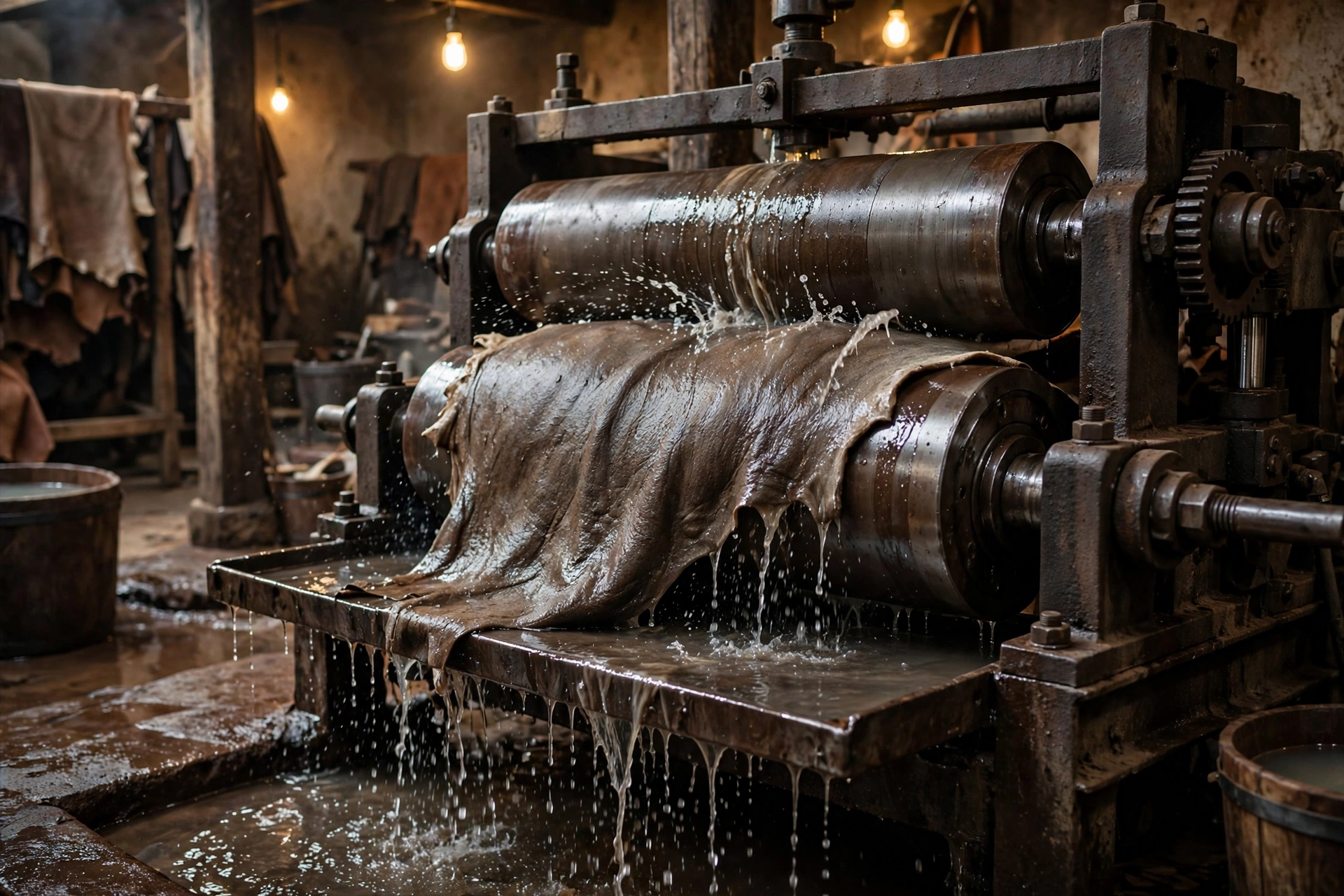
After tanning and washing, hides are heavy with water and chemicals. They need mechanical pressing to reduce moisture content, and this is where sammying machines come in.
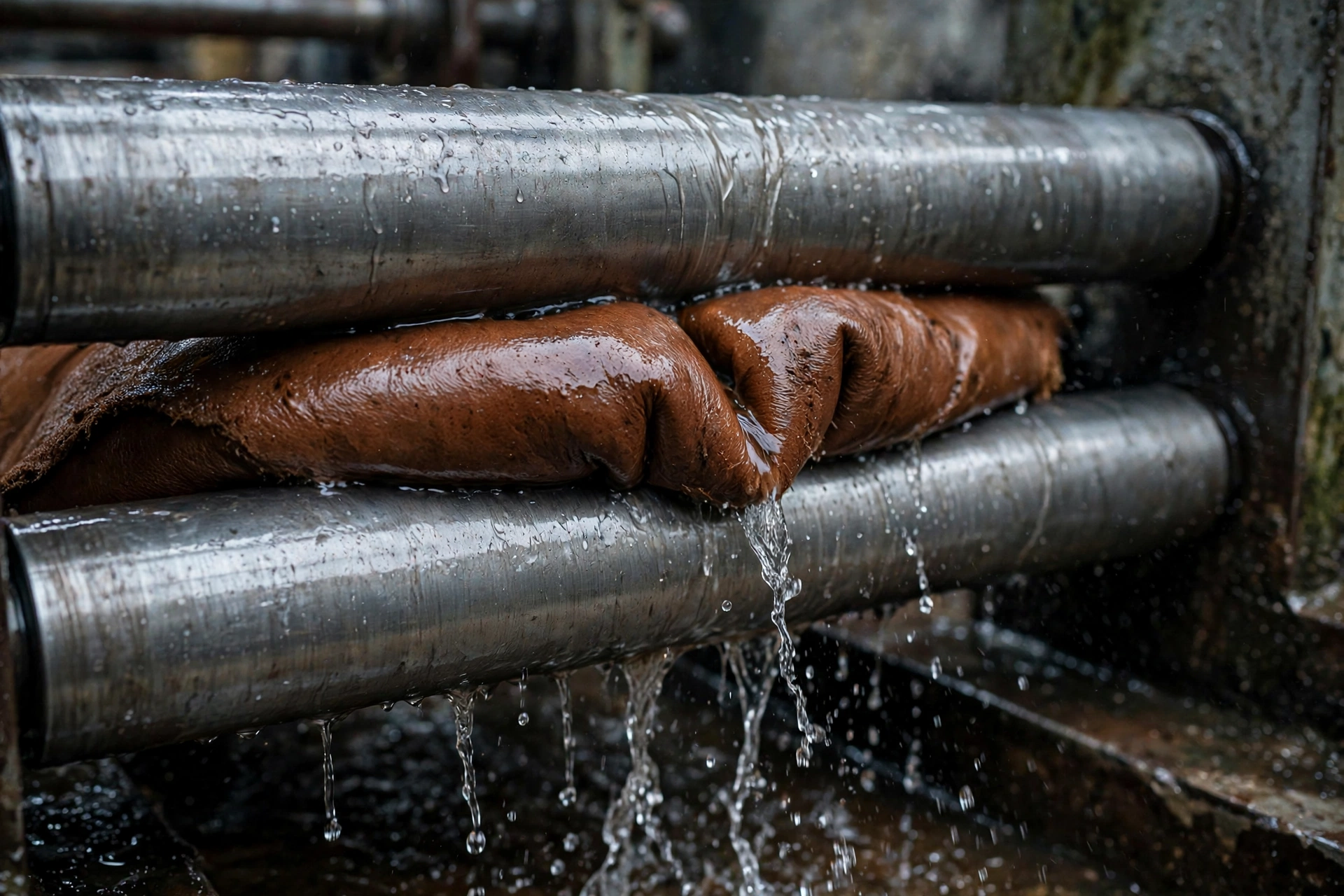
A sammying machine consists of two rollers — one hard and one soft — that squeeze water out of the hide as it passes through. The hides are conveyed on felts through the machine, which absorb the fats and moisture while the rollers apply pressure. For good absorption of the grease, the felts need to be always working wet.
It is estimated that 45–55% of the water contained in the hide is squeezed out during sammying. In short, sammying transforms a waterlogged hide into a stable, damp material that is perfectly ready for precise finishing and drying.
Sammying vs Setting Out
Sammying is often discussed together with setting out, and some machines combine both functions. While sammying focuses on dewatering, setting out stretches the skin or hide during tanning to maximise its size prior to drying.
The setting-out function also stretches the hide slightly, increasing surface area — a key economic consideration for tanneries. Machines by makers such as Bauce or Feltre are popular, and some offer combined sammying-setting-out functions. Both steps are crucial for setting the foundation for consistent drying and finishing.
Key Benefits of Sammying
- Moisture removal and fiber consolidation — the applied pressure makes fibers adhere more closely, creating a compact and stable structure that is less likely to tear or distort later.
- Lower drying costs — preliminary water removal significantly reduces the energy and time required for the final drying stages.
- Smoother surface — the rollers smooth out wrinkles and align the hide for uniform drying.
- Lighter handling — removing water reduces the overall weight when transporting hides from machine to machine, saving time and money.
- Better finishing — a stable, evenly damp hide takes dyeing, fatliquoring, and finishing treatments more consistently.
Where Sammying Fits in Leather Making
Sammying sits in the wet end of the tannery, typically after tanning (or re-tanning) and before splitting, shaving, neutralization, dyeing, and drying. A simplified sequence looks like this: soaking, liming, tanning, sammying, splitting, shaving, neutralization, dyeing, fatliquoring, drying, and finishing.
Skipping or rushing sammying leads to uneven drying, distorted grain, and wasted energy — which is why every professional tannery treats it as a non-negotiable step.
Sources: TechDemis — Sammying in Leather Making: Process, Benefits & FAQs, AGGZ — The Leather Processing Workflow and the Machines Behind It
Frequently Asked Questions
What is sammying in leather?
Sammying is the mechanical process of removing excess moisture and grease from hides after tanning by passing them through rollers, bringing moisture down to roughly 30–40%.
What does a sammying machine do?
A sammying machine uses two rollers — one hard and one soft — to squeeze water out of the hide as it travels on wet felts, while also smoothing wrinkles and aligning the hide.
Is sammying the same as drying?
No. Sammying only reduces moisture to a controlled damp level (about 30–40%). Full drying happens later using vacuum, toggle, or paste dryers.
What comes after sammying?
Typically splitting and shaving, followed by neutralization, dyeing, fatliquoring, drying, and finishing.
Why is sammying important?
It consolidates fibers, cuts drying energy and time, reduces handling weight, and creates the stable, even starting point that quality finishing requires.
The Bottom Line
Sammying may be an unfamiliar word, but it is the quiet workhorse of the tannery: squeezing 45–55% of the water out of freshly tanned hides, steadying their fibers, and setting up everything that follows. Without it, there is no smooth, strong, evenly finished leather.
For more guides like this, browse the latest posts on nowitstrend.co.uk.