


If you’re searching for the best arroz con leche boliviano near me, you’re chasing one of Bolivia’s most comforting desserts: slow-cooked rice pudding perfumed with cinnamon and finished with vanilla. This guide explains what makes the Bolivian version distinct, how to find an authentic serving near you, what to check before you order, what a fair price looks like, and a reliable homemade recipe for when no restaurant is close.
What Is Bolivian Arroz con Leche?
Arroz con leche means “rice with milk.” It is a slow-cooked pudding of rice, milk, and sugar, and variations of it appear in food cultures around the world (see this overview of rice pudding traditions). In Bolivia, it is a staple dessert: served at family gatherings, sold from market stalls, and listed on the dessert menus of traditional restaurants. The rice is simmered gently until tender and suspended in thick, sweetened milk — creamy enough to hold a spoon, never stiff or dry.
What Makes the Bolivian Version Different?
Not all rice puddings taste alike. The Bolivian style has a recognizable profile once you know what to look for:
- Cinnamon does the heavy lifting. Cinnamon sticks simmer in the pot during cooking, and ground cinnamon is dusted over each serving.
- Whole milk base. Traditional recipes use whole milk rather than water, giving the pudding a richer body.
- Vanilla as standard. A little vanilla extract rounds out the flavor.
- Optional extras. Some families add raisins or a strip of lemon peel; many enrich the pot with condensed or evaporated milk.
- Served warm or cold. Both are traditional — warm straight from the pot, or chilled from the refrigerator.
- Thickened by rice starch alone. Unlike some European baked custards, Bolivian arroz con leche typically contains no eggs.
How to Find the Best Arroz con Leche Boliviano Near Me
Search Google Maps the Smart Way
Try searches like “Bolivian restaurant near me,” “arroz con leche near me,” and “Latin bakery near me.” Then do what most people skip: open the photos and reviews. Reviewers often photograph the dessert menu, and comments mentioning “arroz con leche,” “postre,” or “homemade dessert” are strong signals. A place whose reviewers praise the desserts specifically is a better bet than one with generic five-star ratings.
Bolivian and Latin American Restaurants
Authentic Bolivian restaurants are your best starting point — arroz con leche is a standard dessert on traditional menus. Check the dessert section of the online menu before visiting, and consider calling ahead: small family-run places sometimes prepare it only on certain days or until it sells out.
Bakeries, Cafés, and Market Stalls
Latin American bakeries and cafés often sell individual cups of arroz con leche to take away, usually made fresh that morning. Weekend farmers markets and street-food vendors are also worth checking — homemade desserts are a common sight at stalls run by Latin American families.
Food Festivals and Community Events
Cultural festivals celebrating Latin American heritage frequently feature traditional desserts prepared by community cooks. These are among the most authentic servings you will find anywhere, and vendors are usually happy to tell you exactly how they make it.
How to Spot a Truly Authentic Serving
Use this checklist when you order:
- It tastes of milk, not just sugar. Sweetness should support the dairy flavor, not bury it.
- Cinnamon in two forms. The flavor of cinnamon sticks from the cooking pot, plus a fresh dusting of ground cinnamon on top.
- Tender rice, intact grains. The rice should be soft but not dissolved into mush.
- Creamy body. It should coat a spoon — neither a thin soup nor a stiff block.
- Made fresh. Ask if it was made today. Freshly prepared arroz con leche has the best texture; rice pudding thickens and dulls as it sits.
- Served at the right temperature. Warm or properly chilled are both fine. Lukewarm from sitting out is a warning sign.
What Should It Cost?
Arroz con leche is an inexpensive dessert to make, and prices reflect that. Expect to pay roughly what any café dessert costs in your area — a few pounds in the UK or a few dollars in the US for a takeaway cup. Sit-down restaurants charge more, while bakeries and market stalls are usually the cheapest option. If a restaurant charges a premium price, the portion, presentation, or accompanying extras (fresh fruit, caramel, quality chocolate) should justify it.
Bolivian Arroz con Leche Recipe: Make It at Home
Homemade arroz con leche is genuinely simple — one pot, basic ingredients, and about 45 minutes, most of it gentle simmering. This version follows the traditional Bolivian profile: cinnamon sticks in the pot, whole milk, vanilla, and a cinnamon dusting to finish.
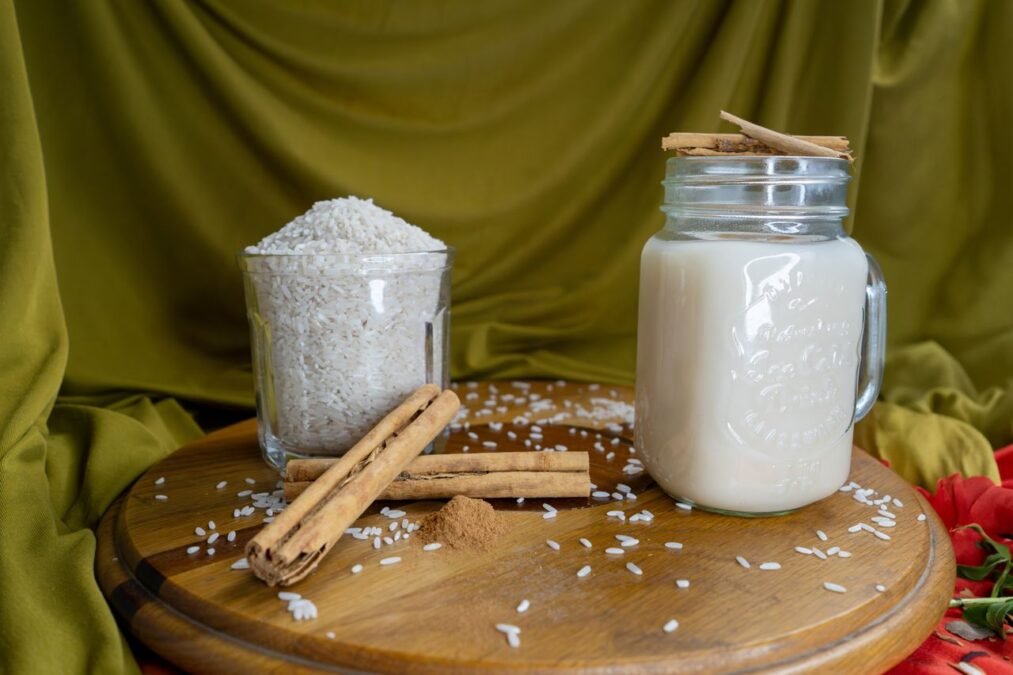
Ingredients (Serves 6)
- 200 g (1 cup) short- or medium-grain white rice
- 1 litre (4 cups) whole milk, plus extra for loosening
- 250 ml (1 cup) water
- 2 cinnamon sticks
- 1 strip of lemon peel (optional)
- 100 g (½ cup) sugar, adjusted to taste
- 120 ml (½ cup) condensed milk or evaporated milk (optional, for extra richness)
- 1 teaspoon vanilla extract
- Pinch of salt
- Ground cinnamon, to serve
- Raisins (optional)
Method
- Rinse the rice under cold water until the water runs mostly clear. This removes excess surface starch and keeps the pudding creamy rather than gluey.
- Simmer the rice in water with the cinnamon sticks (and lemon peel, if using) over medium heat until the water is absorbed, about 10 minutes. Stir occasionally.
- Add the milk and salt. Reduce to low heat and cook gently for 25–30 minutes, stirring often and scraping the bottom of the pot so nothing catches.
- Sweeten the pot. Stir in the sugar and condensed or evaporated milk (if using). Cook 5–10 minutes more until thick and creamy — it should fall slowly from the spoon.
- Finish. Remove the cinnamon sticks and lemon peel. Stir in the vanilla extract and raisins (if using).
- Rest and serve. Let it stand for 10 minutes — it thickens as it cools. Serve warm, or refrigerate and serve chilled, with ground cinnamon dusted over each portion.
Tips for the Creamiest Result
- Keep the heat low. Milk scorches easily; a gentle simmer and frequent stirring are non-negotiable.
- Stir, don’t walk away. The last 15 minutes need the most attention as the pudding thickens.
- Loosen as needed. The rice keeps absorbing liquid off the heat — stir in warm milk to bring it back to a spoonable consistency.
- Sweeten to your taste. Start with less sugar; you can always stir more in at the end.
How to Store and Reheat Leftovers
Refrigerate in an airtight container for up to 3–4 days. A skin may form on the surface — just stir it back in or lift it off. Reheat gently on the stove with a splash of milk, stirring until smooth, or microwave in short bursts, stirring between each. Freezing is not recommended: the texture turns grainy when thawed.
What to Serve With Arroz con Leche
The dessert’s creamy sweetness pairs well with warm drinks that have a little bite: fresh coffee, hot chocolate, or cinnamon tea. For something authentically Bolivian, try it alongside a warm cup of mate de coca — the herbal tea’s lightness balances the pudding’s richness.
Explore More Bolivian Dishes
If arroz con leche has won you over, Bolivian cuisine has plenty more to offer. Try a hearty bowl of locro de zapallo, the traditional pumpkin stew, or the comforting lentil stew in our guide to the best guiso de lentejas near you. Many of the same family-run restaurants serve all three. And if you would like to venture beyond Bolivian desserts, our guide to the best pollo al champignon near you covers another beloved Latin comfort dish.
Frequently Asked Questions
What is arroz con leche?
Arroz con leche (“rice with milk”) is a slow-cooked rice pudding made from rice, milk, sugar, cinnamon, and vanilla. It is popular across Latin America, with Bolivia’s version known for its cinnamon-forward flavor and creamy texture.
What makes the Bolivian version different?
The Bolivian style is defined by cinnamon sticks simmered in the pot plus ground cinnamon on top, a whole-milk base, vanilla, and often condensed or evaporated milk for extra richness. Some families add raisins or lemon peel.
Is arroz con leche served hot or cold?
Both are traditional. It is delicious warm, straight from the pot, and equally good chilled from the refrigerator. Avoid servings that are merely lukewarm from sitting out.
Is arroz con leche gluten-free?
Yes — it is made from rice and milk, both naturally gluten-free. If you have coeliac disease, check that the kitchen avoids cross-contamination.
How long does homemade arroz con leche last?
Up to 3–4 days in an airtight container in the refrigerator. Stir in a splash of warm milk when reheating to restore the creamy texture.
Can I make it with plant-based milk?
Yes. Oat milk gives the closest creamy result; coconut milk also works but adds its own flavor. Keep the cinnamon and vanilla the same.
Why did my arroz con leche turn out too thick or too thin?
Rice keeps absorbing liquid as it sits, so pudding that looked perfect in the pot can firm up — loosen it with warm milk. If it is too thin, simmer a few minutes longer, stirring constantly; it thickens as it cools.
Where can I buy authentic Bolivian arroz con leche near me?
The best arroz con leche boliviano near me is usually found at Bolivian and Latin American restaurants — check their dessert menus online and call ahead, since small places may prepare it only on certain days. Latin bakeries, cafés, weekend markets, and cultural food festivals are also reliable sources.
Final Thoughts
Finding the best arroz con leche boliviano near you is about more than satisfying a sweet craving — it is a way to experience Bolivia’s culinary heritage, often through the family recipes of local cooks. Use the checklist above to judge authenticity, try the homemade recipe when no restaurant is close, and don’t stop at dessert: the same kitchens usually serve the savory classics that make Bolivian food worth exploring.