
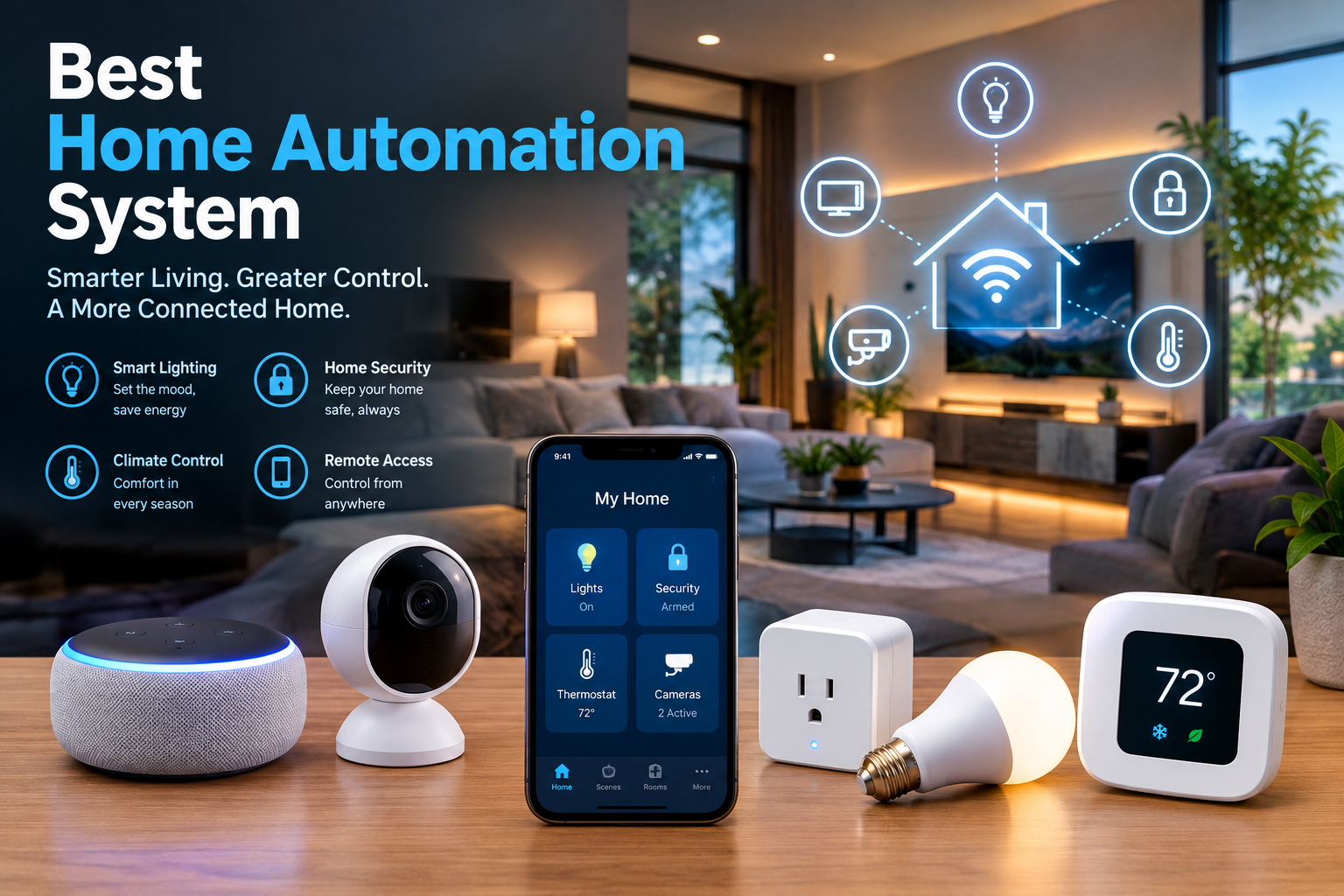

Choosing the best home automation system can transform an ordinary house into a connected, convenient, and more efficient living space. From controlling lights with your voice to monitoring security cameras from your phone, smart home technology gives homeowners greater control over everyday tasks.
With so many platforms and devices available, however, choosing a system can feel confusing. The right solution depends on your home’s size, existing devices, budget, and the type of automation you want.
What Is a Home Automation System?
A home automation system connects compatible smart devices so they can be controlled from one place or work automatically according to specific conditions.
For example, you can create a bedtime routine that turns off selected lights, adjusts the thermostat, locks compatible doors, and activates security devices. Instead of performing each task separately, one command can handle the entire routine.
Modern systems can connect smart lighting, thermostats, cameras, doorbells, locks, speakers, sensors, appliances, and entertainment equipment.
Key Features of the Best Home Automation System
When comparing smart home platforms, look beyond basic remote control. A good system should provide useful features that fit your daily routine.
Device compatibility is one of the most important factors. Check whether the platform works with the smart products you already own and whether it supports devices you may purchase later.
Voice control can make automation especially convenient. Compatible voice assistants can allow you to turn lights on or off, adjust settings, or activate routines without reaching for your phone.
Automation routines are another valuable feature. You can schedule actions or create routines that allow several devices to respond to one command.
Security integration can also be important. Cameras, sensors, smart locks, and video doorbells can help you monitor your home remotely.
Popular Smart Home Platforms
Several major technology ecosystems are available for people building a smart home. Amazon Alexa, Google Home, and Apple Home are widely recognized options.
Amazon Alexa offers compatibility with many smart home products and works with compatible Echo devices. Google Home provides integration with Google’s smart home and voice-assistant ecosystem. Apple Home is particularly convenient for people who already use Apple devices.
Matter is another important consideration. It is an industry smart-home standard intended to improve interoperability among supported devices and platforms. When purchasing new products, checking Matter compatibility can help provide greater flexibility.
Home Automation and Security
Smart home automation can make security monitoring more convenient. A connected video doorbell can allow homeowners to see visitors remotely, while compatible cameras can provide access to live or recorded footage.
Door and window sensors can send notifications when activity is detected. Smart locks can also provide convenient access management.
Security should remain a priority when connecting devices to the internet. Use strong, unique passwords, enable available security features, keep device software updated, and protect your home Wi-Fi network.
Saving Energy With Smart Technology
Another advantage of home automation is better control over energy use. Smart thermostats can follow schedules and adjust temperatures according to household preferences. Smart lighting can automatically turn off when it is not needed.
Sensors and automation routines can also help reduce unnecessary operation of connected devices. While smart technology does not guarantee lower energy bills, automation can make it easier to manage consumption.
How to Choose the Right System
The best home automation system for one household may not be the right choice for another. Start by deciding what you want to automate.
If your main goal is lighting, you may only need smart bulbs and a compatible hub or platform. If you want complete home automation, you might consider adding security cameras, thermostats, sensors, locks, speakers, and appliances.
Your existing technology should also influence your decision. Staying within an ecosystem that works well with your current devices can simplify setup and daily control.
Budget matters too. There is no need to automate your entire home immediately. Starting with a few useful devices allows you to learn how the system works before expanding.
Common Mistakes to Avoid
One common mistake is purchasing smart devices without checking compatibility. Another is adding too many devices before establishing a reliable network and automation plan.
It is also easy to focus on impressive features that you rarely use. Instead, identify everyday problems you want technology to solve.
Finally, remember that smart devices require ongoing updates and security management. Keeping everything updated can help maintain a safer and more reliable connected home.
Frequently Asked Questions
What is the easiest home automation system to use?
Ease of use depends on your existing devices and preferred technology ecosystem. Systems with straightforward apps, voice controls, and broad compatibility can make setup easier.
Can I automate my home without a professional?
Yes. Many smart lights, plugs, speakers, cameras, and sensors are designed for DIY installation. More complex electrical or security installations may require professional help.
Is home automation expensive?
It can range from relatively inexpensive starter setups to more advanced systems costing considerably more. Starting with essential devices can help keep initial costs manageable.
Can different smart home brands work together?
Sometimes. Compatibility depends on the devices, platform, and communication standards they support. Checking compatibility before purchasing is important.
Final Thoughts
The best home automation system is one that matches your lifestyle, existing technology, budget, and future plans. A successful smart home does not have to contain dozens of devices. Even a few well-chosen products can make everyday routines easier.
Focus on compatibility, security, reliability, useful automation, and future expansion. By building your smart home gradually and choosing products that work well together, you can create a connected environment that feels helpful rather than complicated.
you may also read nowitstrend.