
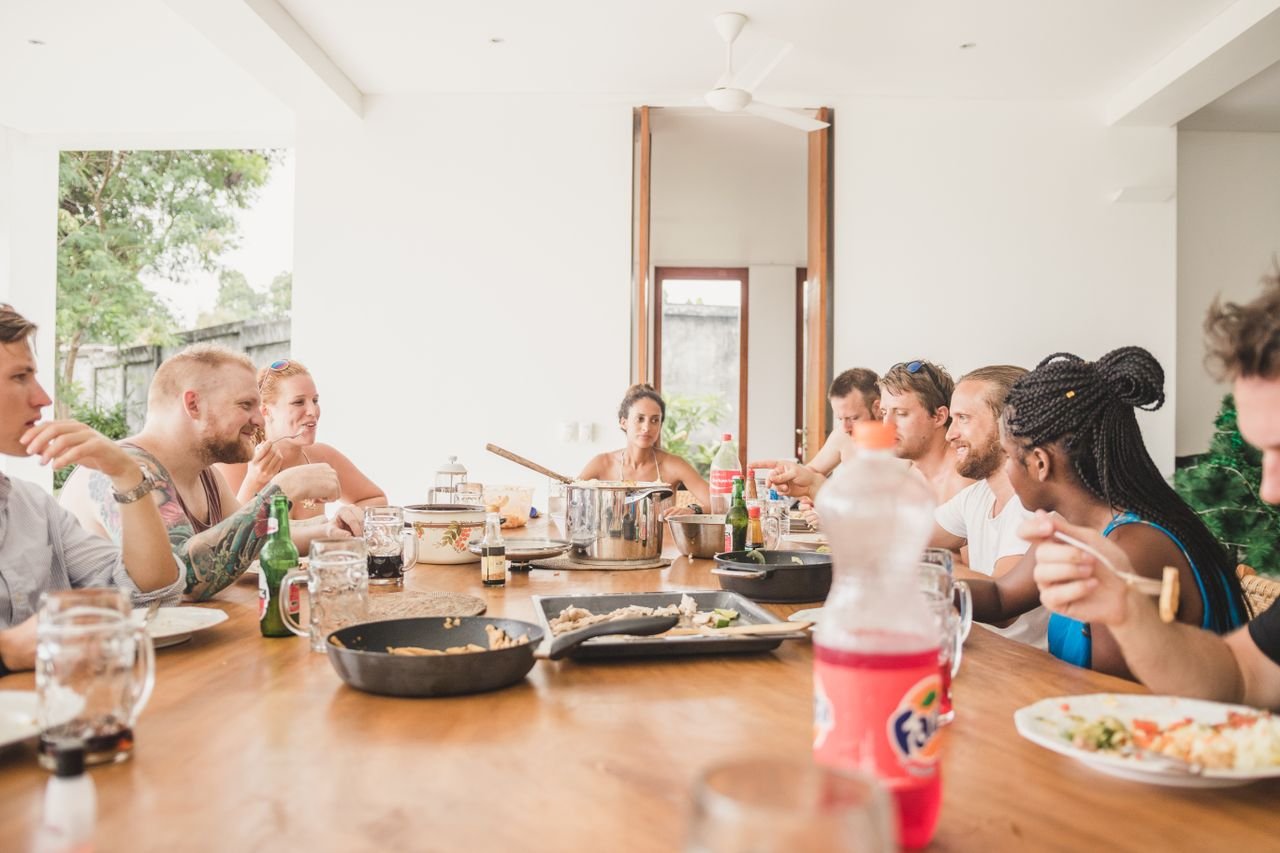

Bjudlunch — from the Swedish bjuda (to invite or treat) plus lunch — means an “invited lunch”: a shared midday meal where the host does the inviting and sets the table. It captures a real Swedish instinct — that community is built around food, not just meetings — and it turns an ordinary lunch into a small act of generosity.
What “Bjudlunch” Means
The word breaks down neatly. Bjuda means to invite, to offer, or to treat someone; bjudning is an invitation or gathering. Swedish builds compounds freely, so the word follows the same pattern as bjudmiddag (an invited dinner): a lunch you are invited to, hosted with intent. It isn’t a formal dictionary entry — it’s a descriptive compound — but it names something genuinely Swedish: the meal as social glue. Food words often hide surprising stories — see our honest guide to babybelletje for another example.
The Swedish Traditions Behind It
The tradition didn’t come from nowhere. Sweden’s famous fika — the daily coffee break with something sweet — is a national institution that pauses work for conversation. Workplace lunch culture runs on the same logic: colleagues eat together, hierarchies soften, and the meal becomes the day’s social anchor. Add lagom (not too much, not too little — just right), and you get the formula: simple food, good company, no showing off.
How to Host Your Own Bjudlunch
Hosting one is refreshingly low-pressure. Invite people personally — a message or a word in the hallway beats a formal invitation. Keep the food simple and home-style: Swedish meatballs with cream sauce, lingonberries, and potatoes; pytt i panna (diced meat and potatoes); yellow pea soup with pancakes; or gravlax with mustard sauce. Always offer a vegetarian option, like a root vegetable gratin. And never skip the finish: coffee and something sweet, the fika promise that rounds off the meal.

Guest Etiquette: The Small Things That Matter
Swedish meal etiquette is simple but firm. Be on time — punctuality is respect. After eating, say tack för maten (“thanks for the food”) to the host; it’s the expected courtesy, not optional politeness. A small gift like flowers or chocolate is appreciated but never required. And if you’re the guest of honor at the meal, remember the unspoken rule: the host invited you, so let them host.
Why It Builds Community
The shared meal quietly flattens hierarchies — when the boss serves the potatoes, titles matter less. It’s low-cost and high-impact: a regular shared lunch welcomes newcomers, strengthens teams, and gives neighbors a reason to know each other. For a deeper take on the ritual itself, read The Ritual of Bjudlunch: Sweden’s Invited Lunch Tradition, and find more food stories in our Food section.
Frequently Asked Questions
Is bjudlunch a real Swedish word?
It’s a descriptive Swedish compound rather than a formal dictionary entry. It follows standard Swedish word formation — bjuda (to invite/treat) + lunch — the same pattern as bjudmiddag, an invited dinner.
What does “bjuda” mean?
Bjuda means to invite, to offer, or to treat someone — as in picking up the bill or extending an invitation.
What food should I serve?
Keep it simple and home-style: meatballs with cream sauce and lingonberries, pytt i panna, pea soup, or gravlax — always with a vegetarian option and coffee to finish.
How is it different from fika?
Fika is the coffee break — coffee and something sweet, usually mid-morning or afternoon. A bjudlunch is a full shared midday meal hosted by invitation. Many end with a fika.
Conclusion
Bjudlunch is a small word for a big idea: invite people, feed them well, and watch a community form around the table. You don’t need Swedish food to start — just the Swedish instinct that no one should eat alone. Start this week: pick a day, invite three people, and make lunch the best meeting of your day.