

If you searched for “calamariere,” you probably expected to find a special pot made just for cooking squid. Here is the honest answer: there is no standard cookware called a calamariere. No Italian dictionary, culinary encyclopedia, or cookware maker lists one. The word is a coined term from content-farm articles — and the search results prove it, with each site offering a different, contradictory definition (see Bing’s results for “calamariere”).
What the articles describe is real enough: a deep pot fitted with a perforated insert, used to blanch squid quickly and lift it out cleanly. That is simply a stockpot with a pasta insert or a spider strainer — tools you may already own. And the underlying cooking advice is genuinely useful, because squid is one of the easiest seafoods to ruin. This guide gives you the truth about the term, the equipment you actually need, and how to cook squid perfectly.
What “Calamariere” Really Is
Strip away the invented branding and a “calamariere” is: a deep pot, a perforated basket or insert, and boiling salted water. Squid goes into the basket, the basket goes into the water for a minute or two, and the basket comes out — draining instantly so the squid stops cooking. Every part of that workflow can be done with ordinary kitchen tools.
Why did the term spread? Because it sounds like authentic Italian culinary vocabulary — compare pastaiola (pasta pot) or couscoussier (steamer pot), which are real. But unlike those, “calamariere” has no verifiable history, no manufacturer, and no entry in any credible culinary reference. Treat it as a descriptive nickname, not a product category.
The Equipment You Actually Need
Forget hunting for a “calamariere.” Here is what reliably does the same job:
- A deep stockpot or pasta pot. Tall sides keep boiling water from sloshing when you lower squid in.
- A perforated pasta insert. This is the “basket” the articles describe. It lets you lift all the squid out at once so nothing overcooks.
- A spider strainer or slotted spoon. The alternative if you have no insert — scoop the squid out the moment it is done.
- A large bowl of ice water. Optional but useful: shocking blanched squid stops the cooking instantly for salads.
- A sharp knife and cutting board. For cleaning and cutting tubes into even rings.
How to Cook Squid Perfectly: The Core Rules
Squid has one famous rule, and it is real culinary science: cook it either very briefly (under 2–3 minutes) or for a long time (30+ minutes of braising). Anything in between turns it rubbery. Squid muscle fibers contract and toughen with moderate heat, then relax again with prolonged gentle cooking. Every good squid recipe respects this.
- Clean it properly. Pull out the quill (the clear plastic-like spine), rinse the tube, peel the speckled skin if you like, and separate tentacles. Pat dry — surface moisture is the enemy of crisp frying.
- Salt the water generously. Blanching water should taste like the sea; it seasons the squid from the outside in.
- Work in small batches. Crowding drops the water temperature and steams the squid instead of flash-cooking it.
- Time it ruthlessly. Rings need 60–90 seconds in boiling water. Tentacles need about 2 minutes. Set a timer.
3 Reliable Squid Cooking Methods
1. Crispy fried calamari. The crowd-pleaser. Soak rings in buttermilk or seasoned milk for 30 minutes, dredge in flour mixed with salt, pepper, and a pinch of paprika, then fry at 175°C (350°F) for 2–3 minutes until golden. Drain on a rack, finish with lemon and sea salt.
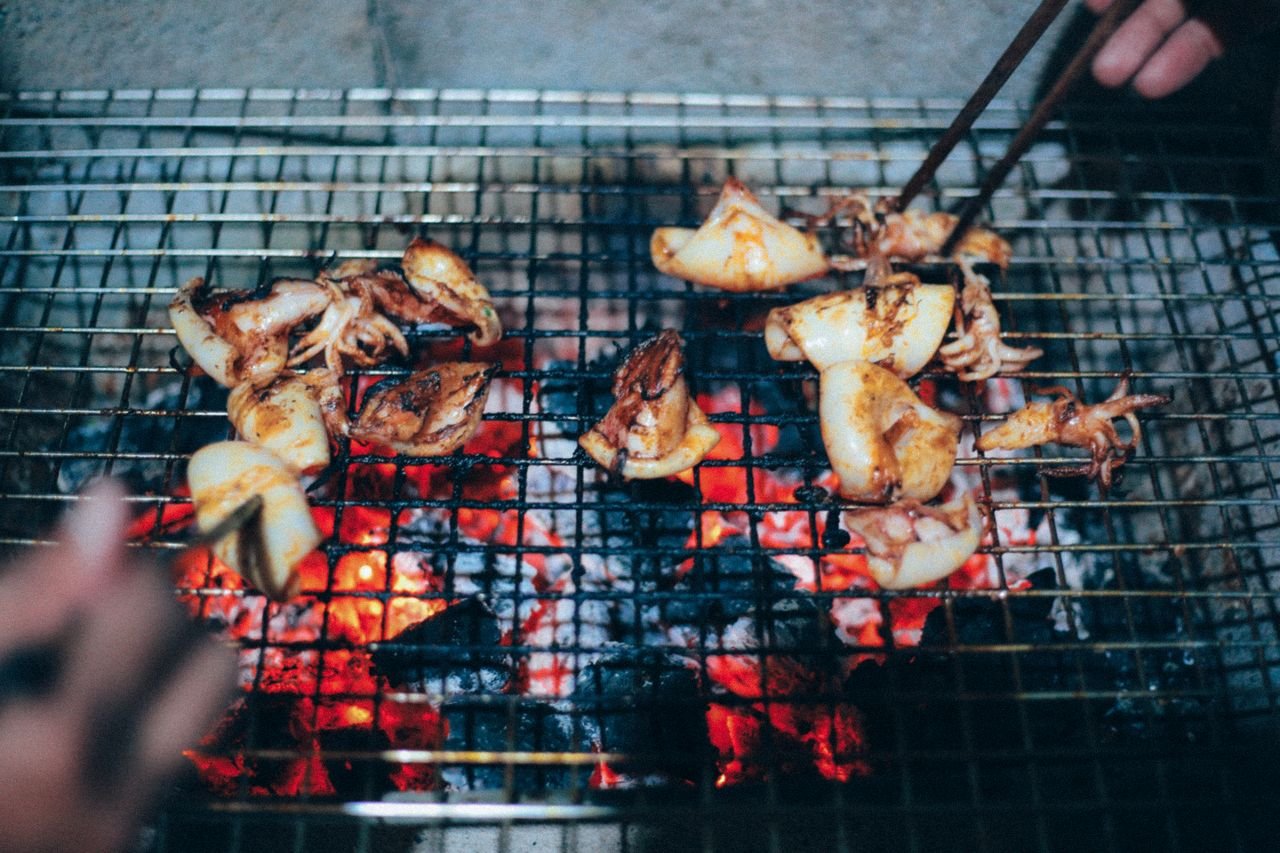
2. Grilled whole squid. Score the tubes lightly, toss with olive oil, salt, and lemon, then grill over high heat 2–3 minutes per side. The char adds flavor while the quick cooking keeps them tender. Tentacles get deliciously crisp at the edges.
3. Slow-braised squid. The exception to the quick-cooking rule. Simmer squid gently in tomato, wine, or broth for 45–60 minutes and it turns meltingly tender — the basis of Mediterranean stews.

Mistakes That Make Squid Rubbery
- The 5-minute simmer. The danger zone. Either pull it at 2 minutes or commit to a full braise.
- Cooking from frozen without thawing. Thaw squid fully in the fridge and pat dry, or the extra water ruins texture.
- Skipping the rest. Let fried calamari drain on a rack, not paper towels, so the crust stays crisp.
- Over-marinating in acid. Lemon or vinegar for 15–20 minutes brightens flavor; hours of acid “cooking” makes squid mushy.
Frequently Asked Questions
Is a calamariere a real kitchen tool?
How long should I cook squid?
Why is my calamari chewy?
Should I buy squid tubes or whole squid?
Can I cook squid from frozen?
Related Reading
If you enjoy food guides, try our tarta de brocoli guide or our tapas and tortilla chips with chorizo guide.