

Short answer: New Pabington makes a strong case, but the title is still up for grabs. Pabington is best understood as a prototype for 21st-century urban regeneration: a plan to turn a contaminated post-industrial brownfield into a mixed-use district built on sustainability, community, and innovation. Its master plan is genuinely impressive. Whether it becomes the new American industrial heartland will depend on two things the plan cannot fully control: the true cost of environmental remediation, and whether it can grow without displacing the very community it claims to serve. Below is the full breakdown: the concept, the three pillars, verified real-world parallels, the honest challenges, and an FAQ.
What Is New Pabington?
Let us start with the most common point of confusion. Pabington is best read as a conceptual model rather than a conventional city profile: it is not a place you will find on a historical map, and it is not an established tourist destination. In the Pabington narrative, the name was coined in the early 2010s by a coalition of urban planners, socially responsible private developers, and community activists who wanted a clean break from decades of failed piecemeal redevelopment. Pabington is a concept and a place at once: a specific post-industrial district reimagined from scratch, and a model other cities could copy.
The site itself tells a familiar American story. For more than a century it was a working manufacturing landscape of foundries, textile mills, and warehouses. Then came the familiar one-two punch of globalization and automation. By the 1980s the district had fallen silent: boarded windows, a contaminated river running through it, and a sprawling brownfield nobody wanted to touch. The coalition that named it Pabington argued that decline is not destiny, only a first step, if the response is coordinated instead of fragmented.
The Three Pillars of the Pabington Master Plan
Every serious regeneration promises sustainability, community, and innovation. The Pabington plan is unusual in treating the three as inseparable rather than as separate line items. Here is what each pillar actually means on the ground.
1. Sustainability by design, not by slogan
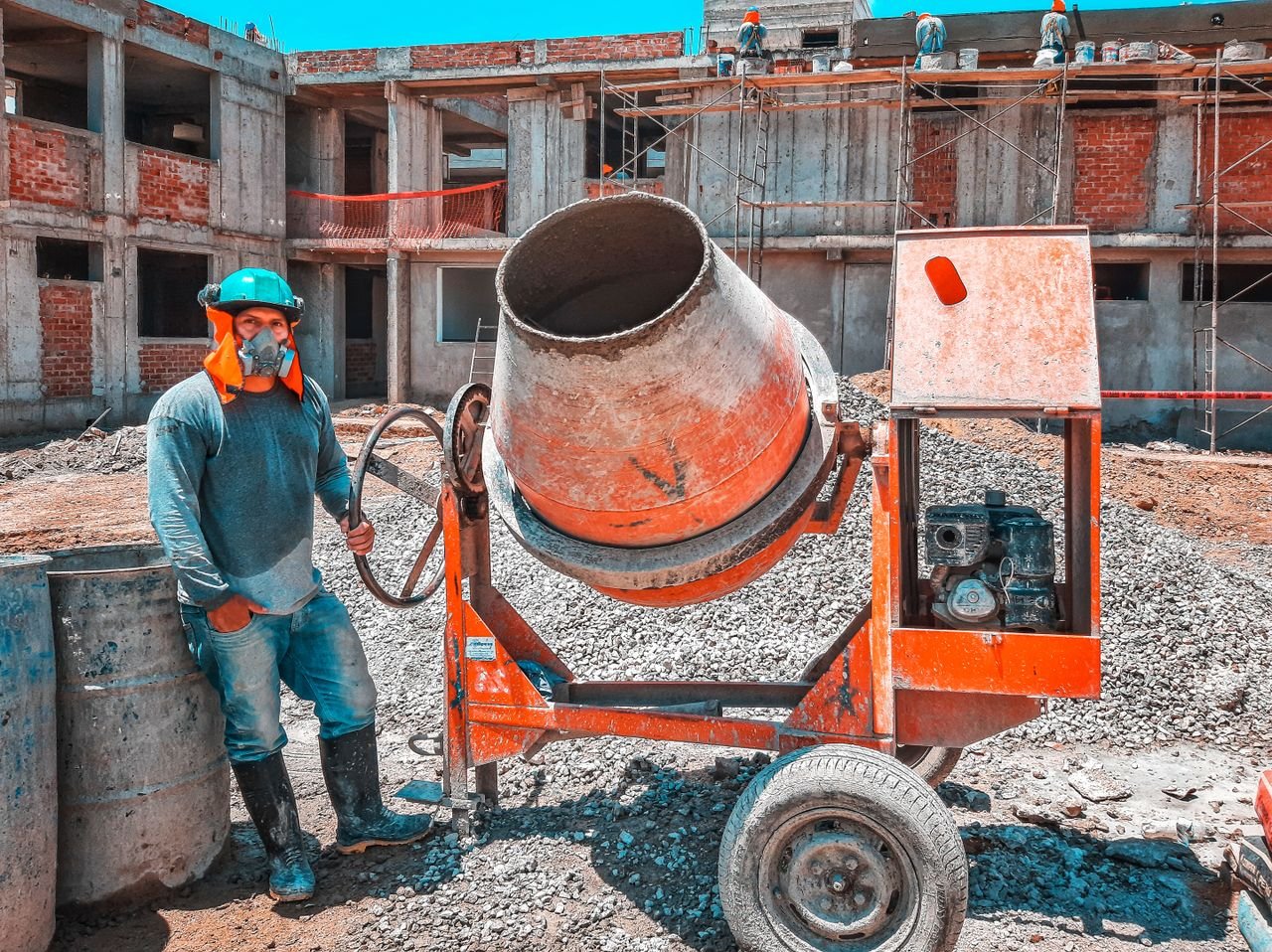
Environmental remediation came first and was the hardest part: a multi-year program to clean contaminated soil and naturalize the riverbanks, turning the once-fenced-off river into the green spine of the district. Energy comes from a district microgrid fed by rooftop solar on the refurbished industrial buildings, while new buildings use geothermal wells for heating and cooling. A district-wide stormwater system captures water for irrigation and toilet flushing, cutting the load on the city sewer network. Streets were designed for people rather than cars, with wide sidewalks, protected bike lanes, secure bike parking, and bike-share stations. To see how this kind of thinking applies to individual buildings, read our look at smarter, more sustainable construction.
2. Community integration with teeth
The feature that separates Pabington from a standard luxury redevelopment is its community benefits agreement: a binding contract between the development team and local residents. A set percentage of new homes must remain affordable to a range of incomes, and construction and permanent jobs are offered to local workers first. Public amenities anchor the social side: a community center that doubles as a social services hub, Foundry Square as the central public space with movable seating and a children’s splash pad, and community gardens with food production courses. The goal is social robustness by design, not by accident.
3. Innovation rooted in the site’s DNA
Rather than erasing the district’s manufacturing past, Pabington updates it. Affordable leases and purpose-built infrastructure attracted green tech start-ups and small-scale manufacturers using 3D printing and CNC machining, a modern echo of the old machine shops. Their demand for services pulled in cafes, restaurants, and retail, creating a local business ecosystem. The model reflects a wider shift toward structured modern urban frameworks that treat economic development and community health as complements, not competitors. Circular thinking runs through the plan too, echoing innovations in material recovery and recycling that keep resources in use instead of in landfill.
Interlacing the Past With the Present
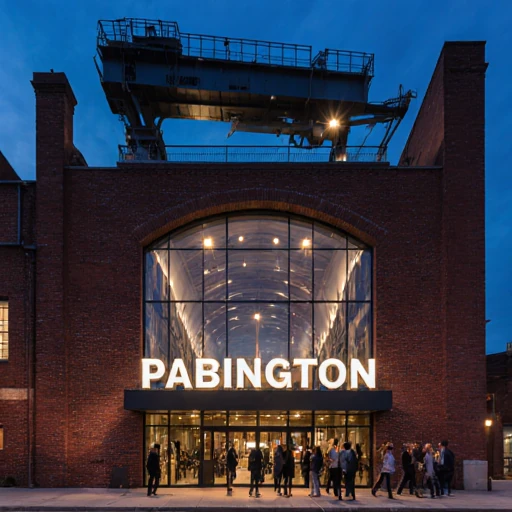
Many regenerations demolish first and ask questions later. Pabington’s developers treated the historic industrial buildings as assets. Old brick warehouses were retrofitted rather than torn down: one became a marketplace for local artisans and food vendors, keeping its high ceilings and overhead crane systems as architectural features; another became a tech incubator where modern glass additions sit alongside preserved brick walls; the landmark foundry building was converted into a performing arts center prized for its large hall. This is adaptive reuse at its best: the district keeps its soul instead of importing a generic one.
How Pabington Compares With Real Regenerations
Pabington is a young concept, so the fairest test is to compare its promises against projects with track records. Three are especially instructive.
The High Line, New York
New York’s High Line is the world’s most famous rail-to-park conversion: a 1.45-mile elevated public park built on a 1930s freight rail line on Manhattan’s West Side. After community advocates formed the Friends of the High Line in 1999, the park opened in phases from 2009 to 2014 and now draws millions of visitors a year. It proves that obsolete infrastructure can become beloved public space, but it also carries a warning for Pabington: surrounding property values and rents soared, fueling exactly the displacement that Pabington’s community benefits agreement is designed to prevent.
Landschaftspark Duisburg-Nord, Germany
In Germany’s Ruhr region, the Landschaftspark Duisburg-Nord turned a former coal and steel production site of around 180 hectares into a public landscape park. The ironworks dated back to 1903 and the last blast furnace shut down in 1985; from 1991 the designer Peter Latz and Partner wove gardens, climbing walls, and event spaces through the old blast furnaces and gasometers instead of demolishing them. Like Pabington, it treats industrial heritage as raw material rather than rubble, and it shows that remediation plus imagination can work at enormous scale.
Pittsburgh, Pennsylvania
Pittsburgh is the closest American precedent for the “industrial heartland reborn” narrative. When its steel industry collapsed in the 1980s, the city rebuilt around education, healthcare, and technology rather than trying to resurrect the mills. The lesson for Pabington is that the new heartland will not look like the old one: it runs on universities, start-ups, and services, not blast furnaces. Pabington’s bet on green tech and small-scale advanced manufacturing follows the Pittsburgh playbook closely.
The Honest Challenges
No honest account of Pabington can skip the hard parts. First, remediation: cleaning a century of industrial contamination is slow and expensive, and costs have a habit of growing once excavation begins. Second, affordability: community benefits agreements are only as strong as their enforcement, and every celebrated regeneration from the High Line onward has faced accusations of gentrification. Third, connectivity: the planned light-rail stop that would link Pabington to the rest of the city is still on the drawing board, and transit delays can stall momentum for years. Pabington’s plan acknowledges all three, which is encouraging, but acknowledgment is not the same as delivery.

Verdict: Is New Pabington the New American Industrial Heartland?
As a model, yes, it deserves a place in the conversation. Pabington combines the best ideas of the last thirty years of regeneration: Duisburg-style respect for industrial heritage, High Line-style community advocacy, Pittsburgh-style economic reinvention, and a binding commitment to affordability that most projects only talk about. As a finished achievement, not yet. Until the remediation is complete, the light rail is running, and the affordable housing targets survive contact with the market, Pabington is the most promising blueprint for a new American industrial heartland rather than the thing itself. That is still a remarkable achievement for a district that was written off decades ago.
Frequently Asked Questions
Where is New Pabington located?
Pabington is a regeneration concept and district rather than a historic city on the map. The name was coined in the early 2010s for a post-industrial district being rebuilt as a prototype for 21st-century urban renewal.
What are the three pillars of the Pabington master plan?
Sustainability, community, and innovation. The plan treats them as inseparable: clean energy and remediation, binding affordable housing and local hiring, and a green-tech business ecosystem rooted in the district’s manufacturing past.
What is a community benefits agreement?
It is a legally binding contract between a development team and local residents. In Pabington’s case it reserves a share of new homes as affordable housing and gives local workers priority for construction and permanent jobs, aiming to prevent displacement as the area improves.
How does Pabington compare to the High Line?
Both turn obsolete infrastructure into public assets, but the High Line is a finished, world-famous park whose success drove nearby rents sharply higher. Pabington is still being built, and its community benefits agreement is explicitly designed to avoid the High Line’s gentrification side effects.
Is the Pabington project finished?
No. Key pieces, including a planned light-rail stop connecting the district to the wider city, are still in development, and long-term affordability targets remain to be proven. It is best viewed as a work in progress and a model for other cities.