
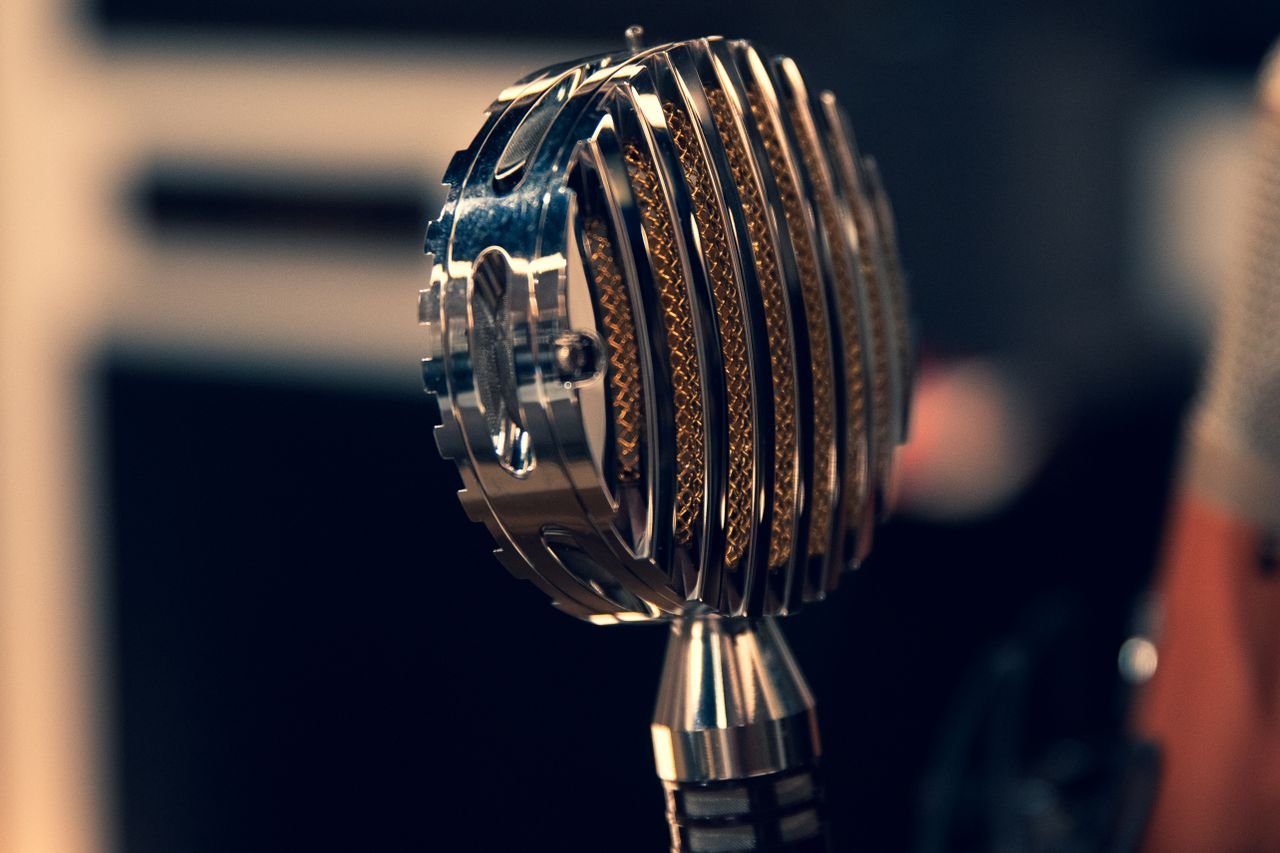

Every song you stream, every podcast you hear, every film score that moves you — all of it rests on a century of audio engineering breakthroughs. Yet the names behind microphones, amplifiers, and magnetic tape recording are largely unknown. While a few figures like Ray Dolby became famous, the vast majority of audio pioneers worked anonymously inside corporate laboratories, their innovations absorbed into products bearing company names rather than their own. This is the story of those unsung pioneers and the technologies they created.
The Microphone Revolution
Early recording relied on carbon-granule microphones — crude devices with limited frequency response and high distortion. The leap forward came with electromagnetic designs, including variable-reluctance microphones, in which sound waves cause a metal reed to vibrate near a magnet, changing electrical resistance and producing a far more accurate signal.
These refinements delivered dramatically improved sensitivity (the ability to capture quiet sounds) and frequency response (the range of pitches captured accurately). The result: clearer voices, richer musical recordings, and the foundation for broadcast radio as a mass medium. Engineers at companies like Western Electric and Bell Labs drove these advances through painstaking work on electromagnetic transduction — the conversion of sound into electrical signals — optimizing designs to reduce unwanted coloration and reproduce sound faithfully.
Amplifiers: The Quest for High Fidelity
Capturing sound was only half the battle; reproducing it without distortion was the other. The quest for high-fidelity amplifiers — circuits that could boost audio signals across a wide frequency range while minimizing harmonic distortion — pushed vacuum tube technology to its limits in the 1930s through 1950s.
Engineers designed novel circuit topologies that extended frequency range and tamed distortion, turning amplifiers from mere volume-boosters into precision instruments. These advances made possible the rich symphonic broadcasts and the emerging art of studio recording, where fidelity mattered as much as loudness.
Magnetic Tape: Recording Becomes Editable
Perhaps the most transformative breakthrough was magnetic tape recording. Developed in Germany in the 1920s and 1930s, the technology came to the United States after World War II, where engineers at companies like Ampex had to decode, refine, and productize it for reel-to-reel systems.
Key challenges included tape head design and bias current optimization — both critical for low-noise, high-fidelity recordings. Tape made editing possible for the first time: performances could be spliced, rearranged, and perfected. Without it, neither multi-track recording nor the sophisticated studio production of the 1950s and 1960s could have existed.
Why the Pioneers Stayed Anonymous
The audio engineering pioneers behind these breakthroughs typically worked inside large firms — Western Electric, Bell Labs, RCA, AEG — where patents belonged to the company and publicity departments decided whose name appeared on press releases: usually no one’s.
This corporate structure is a major reason audio engineering has few household names. The profession tended to celebrate entrepreneurial inventors or bold system designers, while the many engineers who solved critical but less glamorous problems — noise reduction, frequency response, tape bias — remained invisible. They were engineers’ engineers: deeply respected by colleagues, unknown to the public.
The Legacy in Every Recording
Today, audio historians, vintage equipment enthusiasts, and scholars of audio engineering history work to document these contributions, poring over old patents, schematics, and trade journals. Modern boutique manufacturers chase the “warmth” of vintage gear, often recreating circuits developed by long-forgotten engineers.
The microphones that captured the swing era, the amplifiers that carried the first high-fidelity broadcasts, the tape machines that enabled multi-track masterpieces — all were built by people whose names never appeared on a marquee. Their legacy lives in every recording: proof that history is shaped as much by anonymous problem-solvers as by famous inventors.
Conclusion: Listening for the Invisible
The next time you hear a decades-old recording with startling clarity, remember the invisible architects of modern audio engineering. The history of sound is not just a story of famous inventors — it is the accumulated work of countless engineers who eliminated noise, tamed distortion, and taught machines to listen. Their anonymity doesn’t diminish their achievement; it defines an entire model of innovation, where progress emerges from collective, often uncredited, ingenuity.