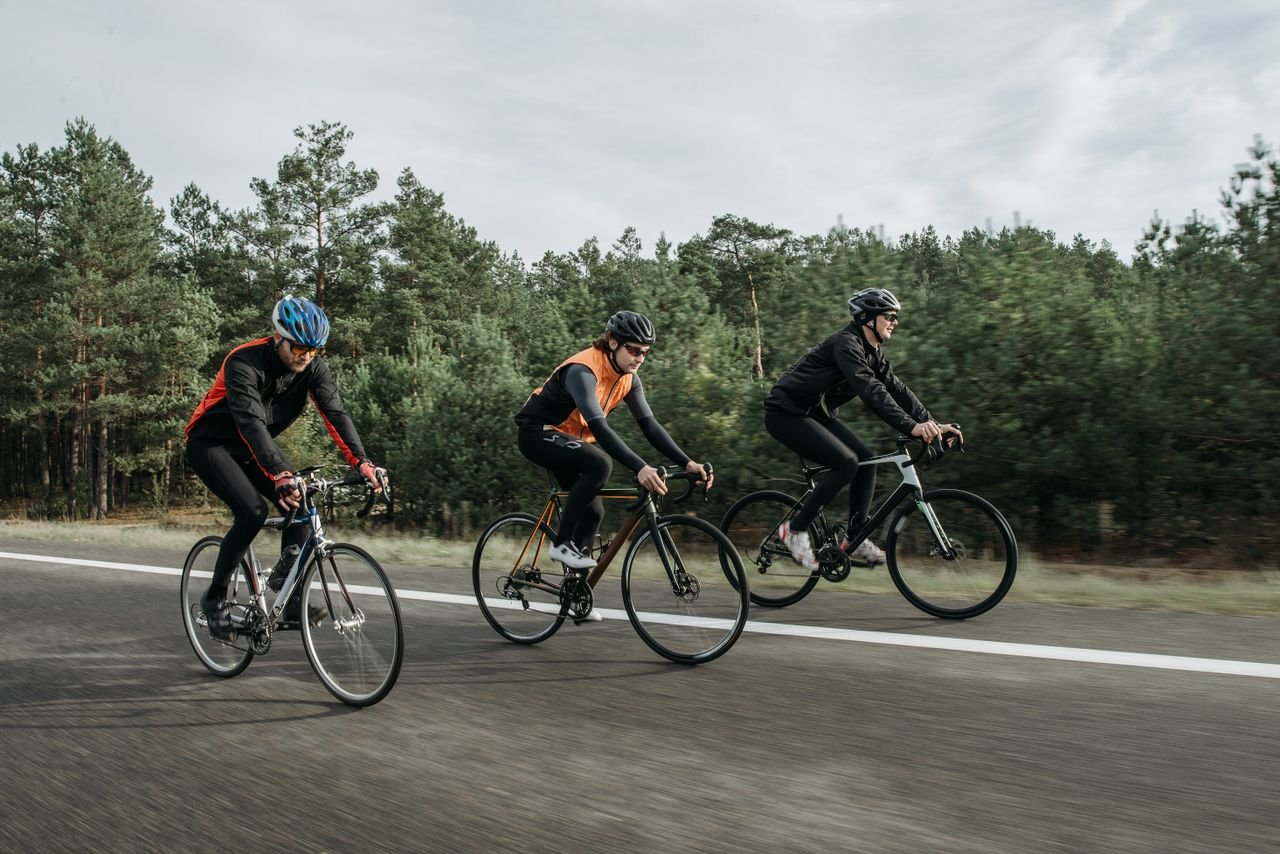

Can you get a DUI on a bike? Yes — in many places, you can. But it depends entirely on where you are. Some jurisdictions charge impaired cyclists under their standard DUI laws, others have a separate, lesser cycling-specific offence, and a few don’t criminalise it at all. Because the law varies so much, the only safe assumption is that riding a bicycle while drunk or high can lead to a fine, arrest, or worse — even if you never touch a car.
This guide explains what “DUI” means for cyclists, how the law differs in the US and the UK (with the actual statutes), what happens with e-bikes, how bike penalties compare to car DUI penalties, and what to do if you’re stopped.
What “DUI” Actually Means for Cyclists
DUI stands for “driving under the influence” (sometimes called DWI, OWI, or “drink driving” depending on the jurisdiction). These laws were written with motor vehicles in mind — but the key legal question is how each statute defines the vehicle it applies to.
That definition is not the same everywhere:
- Some states define DUI around “motor vehicles,” which excludes ordinary bicycles — but they may still punish impaired cycling under a separate law.
- Other states use broader language like “vehicle,” which courts have interpreted to include bicycles.
- A few places have a dedicated “cycling under the influence” offence with its own (usually lighter) penalties.
The bottom line: you cannot assume that DUI laws don’t apply just because you’re on a bike instead of in a car.
Can You Get a DUI on a Bike in the US?
In the United States, it varies state by state. A few states (such as New York) generally do not apply their DWI statutes to bicycles. But many others do — either through broad statutory language or a cycling-specific law.
California is the clearest example. Vehicle Code §21200.5 makes it a misdemeanour to ride a bicycle on a highway while under the influence of alcohol or drugs. The punishment is a fine of up to $250 — notably, no jail time, unlike a standard DUI. It’s a separate, lesser offence, but it is still a criminal conviction on your record. You can read the statute on the California Legislative Information site.
Other states take different approaches. Some treat an impaired cyclist the same as an impaired driver. Some allow officers to charge reckless cycling, public intoxication, or disorderly conduct instead. Because the details matter so much, always check the law in the specific state where you’re riding.
Can You Get a DUI on a Bike in the UK?
Yes. In the UK, Section 30 of the Road Traffic Act 1988 makes it an offence to ride a cycle on a road or public place while “unfit to ride through drink or drugs” — meaning your riding is impaired. The maximum penalty is a fine of up to £1,000. You can read the exact wording on legislation.gov.uk, the UK’s official statute site.
Note that this is a separate offence from “drink driving” (which applies to motor vehicles and carries far heavier penalties, including driving bans and prison). Cycling while unfit won’t cost you your driving licence — but a £1,000 fine and a criminal record are serious enough.
What About E-Bikes and Electric Scooters?
This is where riders get caught out. In many jurisdictions, e-bikes and electric scooters are legally classified as motor vehicles (or as a distinct regulated category), which means the full DUI law applies — not the lighter cycling offence.
The classification usually depends on factors like top assisted speed, motor wattage, and whether the vehicle has pedals. A high-powered e-bike that functions like a moped is far more likely to be treated as a motor vehicle than a standard pedal-assist bicycle. If you ride an e-bike, check how your state or country classifies it — the difference could be a $250 cycling fine versus a full DUI with licence suspension and jail time.
Bike DUI vs. Car DUI: How Penalties Compare
Where cycling-specific offences exist, the penalties are almost always lighter than a standard DUI — but “lighter” doesn’t mean trivial:
- California (bicycle): up to $250 fine, no jail, no licence points (VC §21200.5).
- California (car DUI): up to 6 months in jail, ~$1,000+ in fines, licence suspension, DUI school.
- UK (cycling unfit): up to £1,000 fine, no driving ban (RTA 1988, s.30).
- UK (drink driving): unlimited fine, up to 6 months in prison, minimum 12-month driving ban.
Even a “minor” cycling conviction creates a criminal record, which can affect employment background checks and travel. And if your impaired cycling injures someone, you could face civil liability on top of the criminal penalty.
What to Do If You’re Stopped While Cycling
If police stop you on suspicion of impaired cycling:
- Stay calm and respectful. Arguing or fleeing will only make things worse.
- You don’t have to answer incriminating questions. In the US, you have the right to remain silent. Be polite but know your rights.
- Don’t assume field sobriety tests work the same way. Balance tests designed for drivers may be applied to cyclists, but their reliability on a bike stop can be challenged.
- Contact a local attorney if you’re charged. Because bike DUI law is so jurisdiction-specific, a lawyer who knows your local statutes is essential — a general answer from the internet (including this article) is not legal advice.
How to Check Your State’s Bike DUI Law
Because the law differs so much by location, it’s worth looking up the actual statute for your state or country rather than relying on general summaries. Legal blogs and free legal-information sites are a good starting point — see our guide to using legal blogs wisely for how to research legal topics online and tell reliable sources from unreliable ones.
For primary sources, start with your state’s official legislature site (in the US) or legislation.gov.uk (in the UK), where the full text of every statute is published free. For a worked example of how a real statute plays out in a famous case, see our Rowdy Oxford lawsuit explainer.ree.
Frequently Asked Questions
Can you get a DUI on a bicycle in California?
Not a standard DUI — but California has a specific law (Vehicle Code §21200.5) making it a misdemeanour to ride a bicycle under the influence, punishable by a fine of up to $250.
Does a bike DUI go on your driving record?
It depends on the jurisdiction and the offence. In California, a VC §21200.5 cycling conviction does not add points to your driving record the way a car DUI does. But in states where cyclists are charged under the standard DUI statute, it can appear on your driving record and affect your licence.
Can you lose your driver’s licence for a bike DUI?
Generally no, if you’re charged under a cycling-specific law (like California’s or the UK’s). But if you’re charged under a standard DUI statute that covers bicycles — or if you’re on an e-bike classified as a motor vehicle — licence suspension is possible. Check your local law.
Is it illegal to cycle drunk in the UK?
Yes. Section 30 of the Road Traffic Act 1988 makes it an offence to ride a cycle while unfit through drink or drugs, with a maximum £1,000 fine. It’s separate from (and less severe than) the drink-driving offence for motor vehicles.
Can you get a DUI on an e-bike?
Quite possibly — and the penalties may be harsher than for a regular bike. Many jurisdictions classify e-bikes (especially higher-powered ones) as motor vehicles, which means the full DUI statute applies. Check how your state or country classifies your specific e-bike.
The Bottom Line
So, can you get a DUI on a bike? In many US states and in the UK, yes — though it’s often a separate, lighter offence than a car DUI, with fines up to $250 in California or £1,000 in the UK. E-bikes may be treated as motor vehicles, bringing the full weight of DUI law. And even where no cycling-specific offence exists, impaired riders can still face charges like reckless cycling or public intoxication.
The safest choice is simple: if you’ve been drinking, don’t ride. Get a lift, take a taxi, or walk your bike home. No fine, no record, no risk.