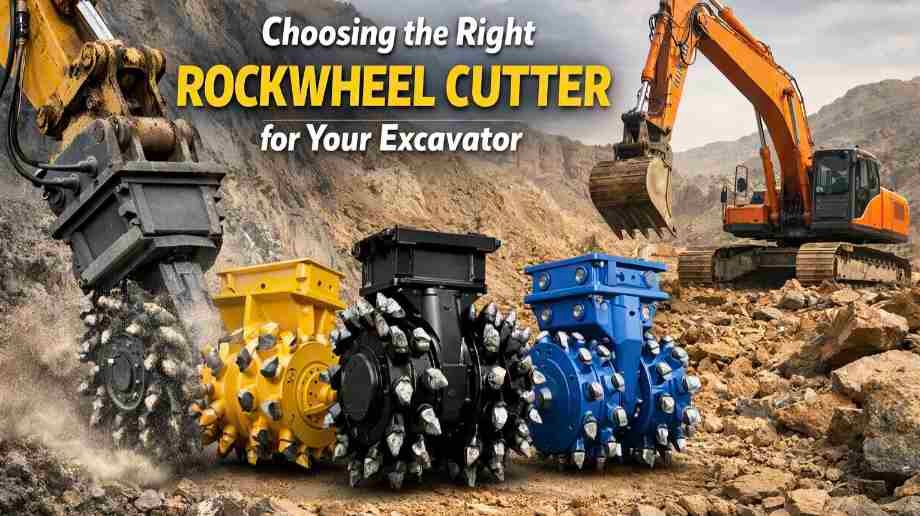
Selecting the right rock wheel cutter for your excavator is a decision that can make or break your project’s productivity, cost efficiency, and machine longevity. Whether preparing for a jobsite, excavating trenches, or climbing on rock surfaces, the success in cutting the rocks using the cutting attachment is what defines how effectively you can accomplish the task. This guide breaks down the essential factors to consider when choosing the correct rock wheel for your excavator, helping you maximize performance and minimize downtime.
Understanding What a Rockwheel Cutter Does
A rock wheel cutter at its finest is created to slice through hard rocks such as rock, shale, frozen ground and concrete with high precision. Rock wheel cutters, as opposed to traditional hydraulic hammers, where impact blows to the rock, have high-speed rotating drums with carbide teeth used to grind the material smooth. This would reduce vibration, provide better control and minimize the risk of damaging adjacent structures in the case of excavator operators.
The key difference between a rock wheel and other cutting tools is the cutting action. A rock wheel cuts and does not smash material. This reduces shock loads transmitted to the excavator boom and linkage, leading to less downtime and longer service life for the host machine.
Why Excavator Compatibility Matters
The size of your excavator, hydraulic flow and control system would directly determine the type of rock wheel cutter that is best suited to your job. Small to mid-sized excavators require different rock wheel sizes and mounting configurations than larger machines.
- Hydraulic flow and pressure: The bigger the rock wheel, the more hydraulic flow and pressure will be required. With an excavator that is not able to provide the necessary flow, the attachment will not perform well and will result in slow cutting and early wear.
- Mounting compatibility: Some rock wheel cutters are directly mounted, whereas some are mounted on quick couplers or adapters. Having the right fit ensures that less time is wasted during the installation process and there is no extra strain on the coupler pins or mounting plates.
Evaluating your excavator’s specifications before selecting a rock wheel cutter ensures that the attachment operates at peak efficiency without compromising the machine’s warranty or structural integrity.
Tooth Options and Wear Considerations
Not all rock wheel teeth are created equal. Carbide tooth solutions are different in form, size, and wear characteristics. The correct decision should be made regarding what material you are cutting:
- Standard carbide teeth: A one-purpose mixed and general excavation tool.
- High-wear carbide tips: These are ideal in rock formations that are abrasive at all times.
- Specialized tooth patterns: The tooth designs are created to maximize cutting action and reduce vibration.
Regularly checking the condition of the teeth and changing the teeth in sets will help optimally cut with the tooth and ensure a long life of your rock wheel cutter.
Hydraulic Requirements and Auxiliary Systems
The power behind the ability of your rock wheel cutter is hydraulic performance. Before investing in a rock wheel:
- Test the auxiliary hydraulic capacity of your excavator. The rating of flow (GPM) and pressure (PSI) will define the size of cutters that will be efficient.
- Consider a high-flow upgrade. A high-flow hydraulic system on your excavator is good for putting the bigger rock wheels on and cutting faster.
- Evaluate return-line filtration. Hydraulic fluid contains contaminants that cause a sharp cutter and excavator. A good filtration will last longer both in the life of the machine and the attachment.
Regularly inspecting tooth wear and replacing teeth in matched sets will optimize cutting performance and extend the life of your rock wheel cutter.
Complementing with a Skid Steer Rock Crusher Attachment
In projects that are done in phases and require material be excavated and subsequently reduced on-site, a rock wheel cutter, when combined with a skid steer rock crusher attachment, can be a game-changer. The rock wheel can be used to excavate and cut accurately, while the crusher attachment processes reclaimed material into usable material. This combination:
- Reduces hauling costs.
- Speeds up project timelines.
- Improves efficiency at the site with a few handling stages.
To reduce workflow, a skid steer rock crusher attachment plus a rock wheel will be an effective workflow for a contractor seeking to optimize workflow.
Conclusion
Choosing the right rock wheel cutter for your excavator requires an understanding of your machine’s capabilities, jobsite demands, and the cutting attachment’s technical specifications. The rock wheel cutters are more precise, efficient and healthier for the machine as compared to other rock-removal instrumentation. They can be used to facilitate smooth project operations when supported with other complementary tools, such as a skid steer rock crusher attachment.
Upgrade excavation performance with Rock Zone Americas’ rock wheel solutions built for precision and power.
About the Author