How Future Healthcare Technology Is Elevating At Home Care
how future healthcare technology is elevating at home care is no longer a scientific idea but a practical approach that is changing how people care for their wellness, health, and healing at home.
The Beginning Of A Different Kind Of Caring Starts At Home
For a long time, healthcare has been about hospitals, clinics, and other speciality facilities. Patients have had to travel, wait, and rely on in-person visits for even the simplest of their concerns. Today, the technology is changing everything. There have been breakthroughs with AI, wearable technology, remote monitoring, robotics, and telehealth.
Our homes will become a healthcare system that monitors our vital signs, warns us about health issues, and supports our rehabilitation. It improves convenience and also positively affects many things, including better results, lower healthcare costs, and greater patient control.
The Emergence Of Virtual Visits In Telehealth
Telehealth is one of the biggest innovations in home healthcare. Thanks to companies like Teladoc Health and health-centric technology integrations on Apple devices, patients can videoconference with their doctors right from home. Virtual appointments are helpful for elderly patrons and patients with chronic conditions because they reduce exposure to infections, reduce travel time, and eliminate geographical barriers. Medical professionals can handle recovery check-ups, prescription refills, and check-ups through secure video calls.
Telehealth is powerful in:
- Pediatrics
- Therapy
- Surgery recovery visitation
- Rural and underserved community visitation
- Chronic disease management
Telemedicine provides health care when and where it is needed.
Wearable Health Tech: Health Monitoring
Wearable technology goes beyond tracking our fitness. Devices that are now considered medical-grade support heart rate, blood oxygen, ECG, and sleep and stress tracking, among other features.
Wearable technology empowers individuals to:
- Detect irregular heart rhythms.
- Monitor blood pressure
- Track glucose levels with compatible technology
- Monitor sleep with minimal interruptions.
- Receive real-time alerts for abnormal readings.
Knowing about health problems before annual checkups is essential. Health care must be treated reactively. Fewer hospitalisations and greater health mean greater safety for all.
Smart Homes and AI
AI integration into homes is creating homes that can be aware of and respond to residents’ health needs. Smart beds, biometric lighting, and AI assistants can now analyse sleep, detect irregular breathing, and even detect falls.
AI-based platforms can analyse large datasets collected from wearables and home sensors and offer personalised recommendations. These recommendations may include:
- Suggestions for food and meals
- Exercise recommendations
- Reminders for medicine
- Suggestions for stress management
- Alerts for drinking water
Machine learning can improve its predictions by learning about an individual’s health over time. Predictive health care represents a positive change in health care, since it shifts from reactive treatment to preventive care.
Monitoring Patients Remotely
With Remote Patient Monitoring (RPM), healthcare providers can manage the health of patients with chronic conditions (such as diabetes, high blood pressure, or heart disease) without patients having to come to the hospital multiple times.
Whenever a health-related device determines that a user’s vitals are outside of the predetermined acceptable ranges, that information is sent directly to a clinician. If there are any red flags indicating an anomaly, a clinician can intervene promptly. This can benefit the patient and reduce the number of hospital admissions or emergency room visits.
The Remote Patient Monitoring (RPM) system has plenty of positive features, such as:
- Patients can have greater independence.
- Healthcare costs can be saved.
- Healthcare providers can speed up their responses during emergencies.
- Patients can stick to their medication schedule.
- Patients can be more involved in their care.
The ability to monitor seniors without leaving their homes is a major advantage for the elderly worldwide.
Robotics and Assistive Technology in Home Care
Robots originally designed for industry have been repurposed to assist the elderly and disabled in the home. These robots will be able to:
- Assist with mobility
- Transport medical devices
- Act as a companion
- Track and report movement
- Notify care providers in the case of an emergency.
Companion robots can play an important role in helping alleviate loneliness among seniors. There is growing concern because of the high level of loneliness in the elderly population. Socially assistive robots can provide conversation and make stimulating chatter. They can also provide task reminders.
Robotics will continue to be integrated into home care as it becomes more affordable.
Personalised Medicine Through Data Integration
Healthcare technology is the future of home care. The telomeres of technology in home healthcare, combined with the most recent advances in medicine, offer incredible possibilities as soon as the identifying data becomes available. There is now a better alternative to the eternal one-size-fits-all medical model. The model of individualised, personalised medicine is now at our doorstep.
Advanced technology can create personalised treatment plans through the continuous development of genetic analysis, artificial intelligence, digital health records, health wearables, and other technologies. Unlike traditional medicine, personalised medicine provides:
- Improved targeting of therapies
- Reduction of side effects
- Better fine-tuning of dosing
- Improved health outcomes over a longer period of time
When combined with home systems, this data-focused technology approach provides the individual with personalised care tailored to their biological and lifestyle needs.
In-home Assistance for Maintaining Mental Health
Caring for one’s mental health is another area where technology is having a dramatic positive impact. Users of mental health apps, artificial intelligence therapy bots, and online therapy portals are receiving assistance in ways that are comfortable for them.
There are a number of applications available that aid mental health management and provide a variety of services, including meditation, therapeutic approaches such as cognitive-behavioural therapy, and tracking and logging. Users can communicate with an Artificial Intelligence user at any time of day, and licensed therapists can engage in therapy in a private and secure manner.
Stigma surrounding seeking mental health assistance and the logistical issues of accessing services are diminished with the available technology.
Intelligent Systems for the Management of Medications
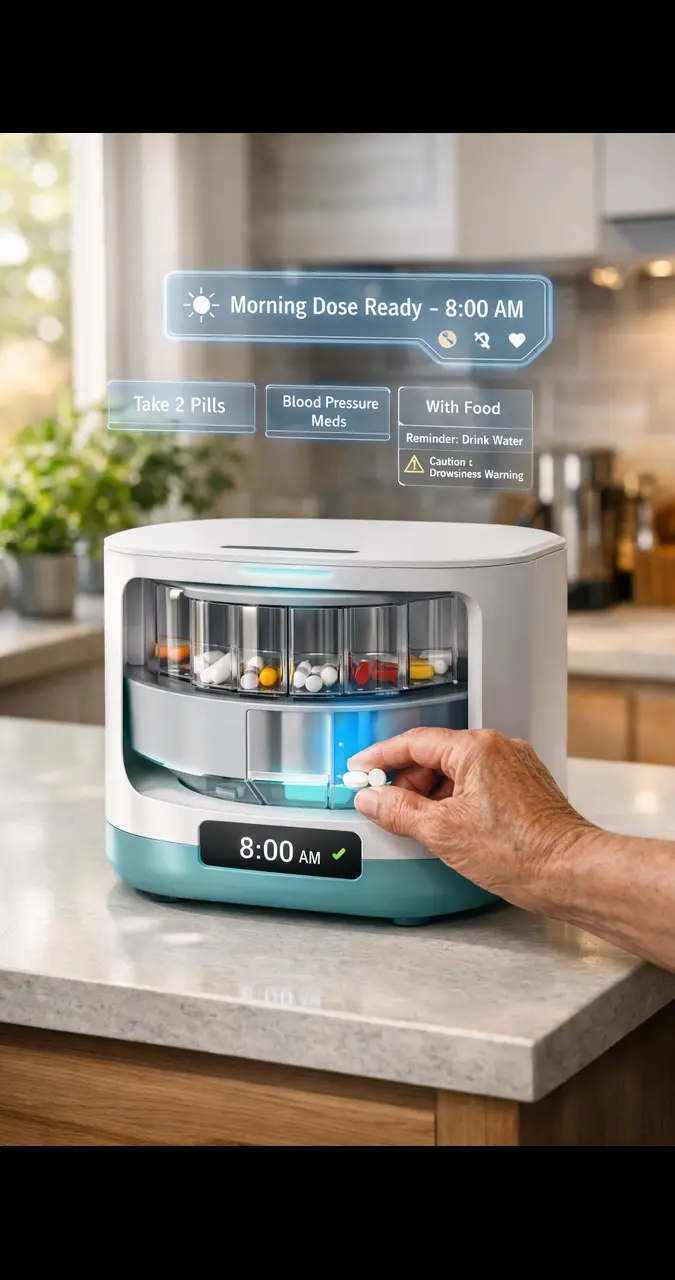
One of the largest obstacles in health care is medication adherence. Smart pill boxes and virtual reminders help ensure medication is taken accurately and on time.
More sophisticated user systems are able to:
- Remain in a locked state until dosing is scheduled.
- Communicate with a caregiver to provide reminders.
- Track doses that have been missed
- Send automated refill requests.
The technology in these systems significantly decreases both the risk of a missed or overmedication for older adults who are taking multiple medications.
Improving Efficiency and Access in Healthcare
Home care technology has lowered the costs of a number of healthcare services, such as:
- Hospital Visits
- Transportation
- Emergency Room Visits
- Routine Checkups
The addition of home care technology has led to greater patient satisfaction without a greater strain on the healthcare system.
Mobile healthcare technology has simplified the provision of healthcare services in rural and developing areas.
Challenges and Ethical Issues
The introduction of technology into home care has compromised data privacy and confidentiality. Furthermore, a lack of digital literacy may worsen existing inequalities. Compassion and care are still needed in the provision of home healthcare services.
It is important to strike a balance between introducing new technologies into home care and protecting data privacy.
Future Vision: Fully Functioning Homes as Healthcare
Mirrors may help in diagnosing skin conditions, and sensors in bathrooms may help analyse certain bodily chemicals. Homes may also have voice assistants to monitor cognitive decline.
The integration between medical facilities and the system at home will become seamless. Automatic medical record updates and coordinated care by AIs and caregivers, working with specialists and primary doctors, will become the norm.
The objective will remain the same: Preventive, predictive, personalised, and participatory healthcare.
Conclusion: The Role of Technology in Independent Living
Today’s transformation illustrates the future of healthcare technology. Advancements in home care have revolutionised the experience from mere convenience to empowered living.
Control over their health data has made early diagnosis and personalised care a reality for patients. The elderly can safely remain in their homes. Chronic disease patients can manage their conditions without frequent hospital visits. Mental health support is more accessible than ever.
Innovative technology at home will replace the perception of home as a mere place of comfort and instead become the core of intelligent, compassionate, and life-enhancing healthcare.
The future of medicine is not confined to the hospital. It is seamlessly and powerfully moving into the home.
you may also read nowitstrend.
About the Author