Bringing a new product, structure, or engineered component to life has never been simple. But in today’s competitive, cost-sensitive environment, the margin for error is thinner than ever.
For startups, manufacturers, architects, and engineering firms in the UK and globally, prototyping and production risks can mean:
- Budget overruns
- Delayed market launches
- Design failures
- Compliance issues
- Reputational damage
This is why more businesses are investing in Custom 3D Modeling Services before moving into physical prototyping or mass production.
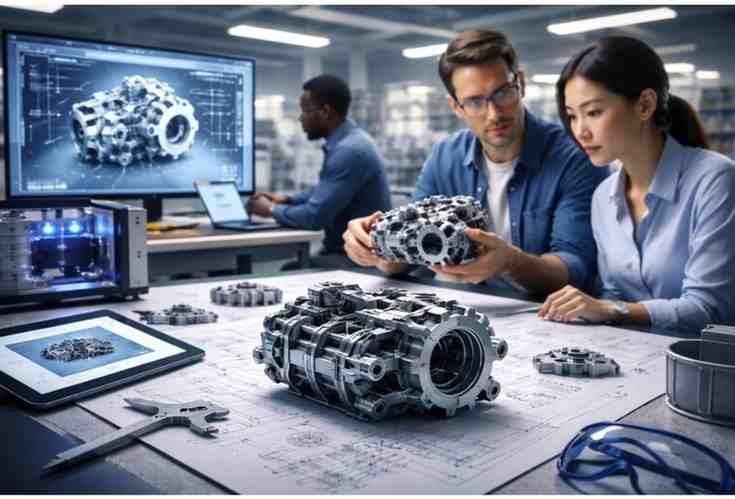
Instead of relying solely on 2D technical drawings or early-stage mockups, decision-makers are turning to advanced digital modeling to test, validate, and refine designs long before materials are cut or machines are switched on.
Let’s explore how this shift is reducing risk across industries.
Why Is Prototyping So Risky in Modern Manufacturing and Construction?
Prototyping is expensive.
According to industry insights published by Deloitte, nearly 30% of product development costs can be attributed to design errors and late-stage modifications. In complex sectors such as manufacturing, automotive, and construction, these errors compound quickly.
Common prototyping risks include:
- Dimensional inaccuracies
- Structural weaknesses
- Assembly misalignment
- Material performance issues
- Compliance failures
Without precise digital validation, physical prototypes often reveal problems too late.
This is where 3D CAD Modeling Services play a transformative role.
What Are Custom 3D Modeling Services and Why Do They Matter?
Custom 3D Modeling Services go beyond basic visualization. They create highly detailed, parametric digital models tailored to specific project requirements.
Unlike generic modeling, custom solutions allow teams to:
- Simulate stress and load conditions
- Validate assembly tolerances
- Perform digital clash detection
- Optimize material usage
- Refine ergonomic and functional performance
For startups launching hardware products or engineering firms designing structural components, this level of customization minimizes uncertainty before production begins.
How Do Custom 3D Modeling Services Reduce Prototyping Costs?
Let’s break it down practically.
1. Early Error Detection
Digital simulations reveal design flaws before manufacturing begins. Structural weaknesses, misalignments, and mechanical conflicts can be corrected in software rather than on the factory floor.
This dramatically reduces rework.
2. Fewer Physical Prototypes
Traditionally, companies produce multiple prototype iterations. With advanced 3D CAD Modeling and Design Services, much of that testing happens virtually.
Benefits include:
- Lower material waste
- Reduced tooling costs
- Faster time-to-market
- Lower R&D expenditure
For SMEs in the UK navigating tight budgets, this efficiency is critical.
3. Improved Collaboration Between Teams
Modern production often involves cross-border collaboration.
Architects, engineers, fabricators, and investors may operate in different locations. Integrated 2D & 3D Modeling Services enable shared digital environments, ensuring everyone works from the same data set.
This reduces communication breakdowns that often cause prototype revisions.
How Do These Services Reduce Production Risks?

Prototyping is just one stage. Production carries its own set of risks.
Manufacturing Tolerance Issues
Minor design inaccuracies can lead to large-scale assembly failures. Custom modeling ensures precision measurements and tolerance validation.
Compliance and Regulatory Challenges
In the UK, product and structural compliance standards are strict. Digital modeling helps validate adherence to specifications before approvals.
When integrated with structured CAD Modeling Services, documentation and digital models align with regulatory expectations.
Supply Chain Efficiency
Accurate models improve procurement forecasting. When quantities and material requirements are digitally calculated, businesses avoid over-ordering or underestimating needs.
Why Is Demand Growing in the UK?
The UK’s manufacturing and construction sectors are undergoing digital acceleration.
Several factors contribute to rising demand for Custom 3D Modeling Services:
- Increasing adoption of Industry 4.0
- Growth in prefabrication and modular construction
- Government-backed digital construction initiatives
- Sustainability compliance requirements
According to research shared by Make UK, manufacturers investing in digital technologies report higher productivity and improved operational resilience.
Digital modeling is central to this transformation.
How Do Custom 3D Modeling Services Support Innovation?
Innovation thrives on experimentation. But physical experimentation is expensive.
Digital modeling allows:
- Rapid design iterations
- Scenario testing
- Performance simulations
- Design optimization
Startups developing new consumer products, industrial equipment, or structural systems can test multiple configurations without manufacturing a single component.
This flexibility encourages innovation while minimizing financial exposure.
What Role Does Automation Play?
Today’s leading 3D Modeling Company solutions leverage automation and AI-powered validation tools.
Emerging technologies include:
- Automated clash detection
- Parametric design adjustments
- AI-assisted generative design
- Integrated digital twin simulations
These technologies make digital prototypes increasingly reliable, reducing dependency on costly physical iterations.
Can Small Businesses Benefit from Custom 3D Modeling Services?
Absolutely.
There’s a common misconception that advanced modeling is reserved for large enterprises. In reality, startups and SMEs often gain the greatest advantage.
Benefits for smaller businesses include:
- Reduced upfront capital risk
- Professional-grade product visualization for investors
- Improved crowdfunding presentations
- Competitive edge in tender submissions
Partnering with an experienced provider of 3D CAD Modeling Services allows small businesses to scale capabilities without hiring in-house specialists.
How Does Integration with 2D Workflows Improve Outcomes?
While 3D modeling is powerful, 2D drawings remain essential for production documentation and regulatory submissions.
Integrated 2D & 3D Modeling Services ensure:
- Manufacturing drawings are directly derived from 3D models
- Revision updates are synchronized
- Assembly instructions reflect accurate geometry
- Compliance documentation aligns with digital models
This reduces inconsistencies that often lead to production setbacks.
What Industries Are Seeing the Greatest Impact?
Custom modeling is benefiting a wide range of sectors:
- Product Design & Manufacturing
- Automotive & Aerospace
- Architecture & Structural Engineering
- Medical Device Development
- Industrial Equipment Fabrication
- Construction & Modular Housing
Across these industries, reducing risk translates directly into financial stability and reputation protection.
What Challenges Should Businesses Be Aware Of?
Despite clear advantages, companies must navigate certain considerations:
- Software compatibility between teams
- Data security concerns
- Initial learning curve
- Choosing the right modeling partner
Working with an experienced 3D Modeling Company that understands UK standards and global best practices minimizes these risks.
What Does the Future Look Like?
The future of Custom 3D Modeling Services lies in deeper integration with digital ecosystems.
Expect growth in:
- Real-time cloud collaboration
- Simulation-driven design
- Digital twin lifecycle management
- Sustainable material optimization
- AI-enhanced predictive analysis
As industries push toward smarter production and greener operations, digital modeling will move from being a competitive advantage to a standard requirement.
Final Thoughts
Prototyping and production will always involve risk. But digital intelligence significantly reduces uncertainty.
By leveraging Custom 3D Modeling Services, businesses gain:
- Greater design accuracy
- Faster innovation cycles
- Lower production costs
- Stronger compliance confidence
- Improved stakeholder trust
In today’s demanding market environment, especially within the UK’s digitally evolving industrial landscape, integrated CAD Modeling Services are no longer optional.
They are strategic risk-management tools.
Many UK-based firms are now quietly collaborating with experienced CAD specialists who blend advanced modeling expertise with regulatory awareness, ensuring that prototypes move smoothly into production with fewer surprises and stronger outcomes.
FAQs:
1. What are Custom 3D Modeling Services?
Custom 3D Modeling Services involve creating precise, project-specific digital models that simulate product or structural designs before physical production begins. These models help identify errors, validate dimensions, and improve overall accuracy.
2. How do Custom 3D Modeling Services reduce prototyping risks?
They allow businesses to test designs digitally, detect structural or dimensional flaws early, and make changes before investing in costly physical prototypes.
3. Are Custom 3D Modeling Services beneficial for UK manufacturers?
Yes. UK manufacturers use advanced 3D CAD Modeling Services to meet strict compliance standards, improve production accuracy, and reduce rework costs.
4. How do 3D CAD Modeling Services improve production efficiency?
3D CAD Modeling Services help optimize tolerances, simulate assembly processes, reduce material waste, and ensure seamless transition from design to manufacturing.
5. Do businesses still need 2D drawings if they use 3D models?
Yes. Integrated 2D & 3D Modeling Services ensure that technical documentation, compliance drawings, and production instructions align with digital models.
6. Can startups benefit from Custom 3D Modeling Services?
Absolutely. Startups use digital modeling to refine designs, present realistic prototypes to investors, and avoid expensive early-stage production mistakes.
7. How do Custom 3D Modeling Services support compliance and quality control?
Digital simulations help validate structural integrity, regulatory standards, and manufacturing tolerances before production begins, reducing compliance risks.
8. Is outsourcing to a 3D Modeling Company cost-effective?
Yes. Partnering with a specialized 3D Modeling Company allows businesses to access expert CAD Modeling Services without building large in-house design teams.
9. What industries benefit most from Custom 3D Modeling Services?
Industries such as manufacturing, automotive, construction, aerospace, product design, and engineering benefit significantly from reduced prototyping errors and improved production accuracy.
10. What is the future of Custom 3D Modeling Services?
The future includes AI-driven simulations, digital twins, cloud collaboration, and automated validation processes that further minimize production risks.
About the Author