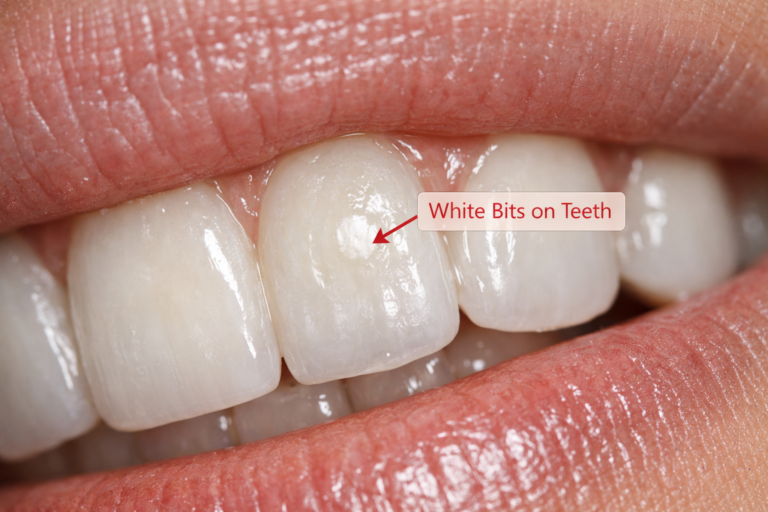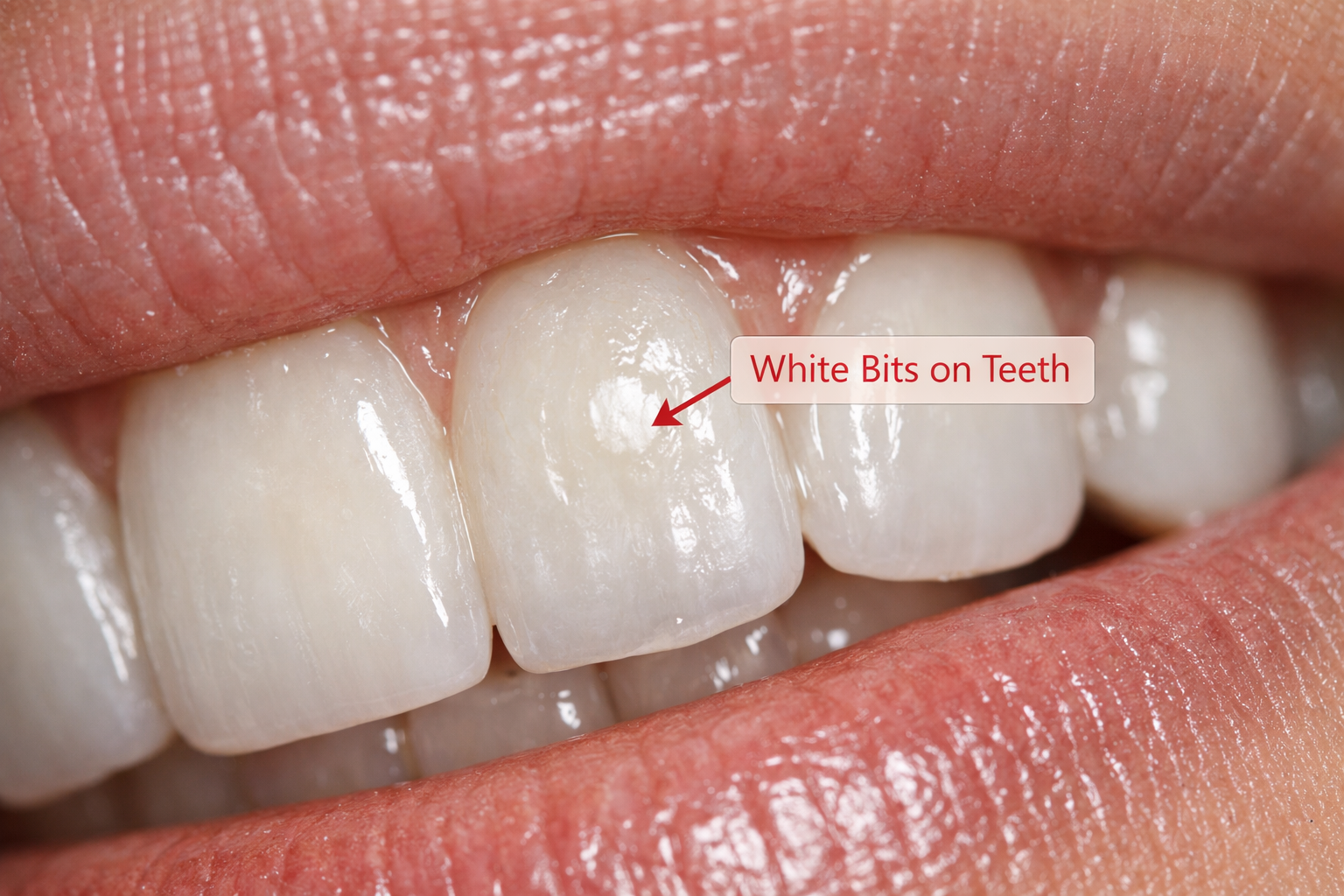
white bits on teeth
Many people notice white bits on their teeth while brushing or in the mirror. White spots on teeth can appear on the surface and result from various causes. While they are, in most cases, harmless, they can affect the appearance of your smile and signal potential underlying problems. Knowing the causes and available treatment options for white bits on teeth can help you on your journey to keeping your teeth healthy.
Defining the White Bits on Teeth
White bits on teeth are spots, patches, or flakes on tooth enamel. Enamel is the protective coating and the area most affected by wear. White bits appear as spots connected to unevenness, deficiency, or damage of the enamel.
White spots can feel rough or smooth to the touch. White bits are associated with changes in the enamel or the surface, but in advanced stages of tooth decay, they can also be present.
White Bits on Teeth: The Factors
Many factors can contribute to the white bits on teeth. While some factors are temporary and do not require dental assistance, others are serious and require professional help.
1. Plaque Buildup
Plaque consists of small amounts of bacteria that form on your teeth. If plaque is not removed with regular brushing and flossing, it can cause white, chalky spots on your teeth.
Plaque buildup is the biggest contributor to white spots on your teeth, especially if they are located on or near your gums.
2. Enamel Demineralization
Demineralization of the enamel occurs when the components of the enamel (which are the minerals, calcium, and phosphate) are removed from the enamel. This weakens the enamel, leading to white patches or spots.
Enamel destruction is one of the first steps towards tooth decay.
3. Fluorosis
Fluorosis is caused by too much fluoride during early tooth development. It leads to white spots, patches, or streaks on teeth.
Although this condition can make your teeth look bad, it does not damage them.
4. Poor Oral Hygiene
When people do not regularly practice good oral hygiene, plaque can build up and damage the enamel. Significant amounts of white spots on teeth can be caused by letting food particles and bacteria sit on the teeth for extended periods of time.
People with braces might be more likely to develop this problem because it is difficult to clean around their brackets and wires.
5. Diet and Acidic Foods
The more you eat sugary or acidic foods, the more you weaken the enamel. While acidic foods and sugary drinks like soda, sports drinks, and citrus juices are highly erosive to enamel and can cause white spots, a diet low in essential minerals like calcium can also lead to white spots.
Are white spots on teeth a problem?
In most cases, white spots on teeth are not a concern; however, they may signal a more serious issue, such as early tooth decay or enamel erosion.
If the spots get bigger, become painful, and/or change to an off-white, brown, or black color, you will need to see a dentist.
If not, you risk your dental health and may need extensive, expensive repairs.
What will a dentist likely do to see white spots on teeth?
Most dentists rely on their eyes to spot white spots. They may also use a light or a tool to see the spots.
Sometimes they will take dental X-rays to see if there are any deeper cavities or damaged spots.
This helps them determine whether the spots need to be fixed or can be left alone.
What to do about White Spots on Teeth
Every case of white spots is different. How serious the issue is and the problem’s source show what options you have available to help the health and appearance of the teeth.
1. CleDental cleaning is the first step to improving the look of your teeth. teeth. It removes plaque, scale, and surface stains.
2. Fluoride
To fix spots and prevent them from recurring, you can receive a referral for a dental fluoride treatment. This is an effort to strengthen the tooth’s enamel by restoring missing minerals.
3. Microabrasion
This pThis particular dental procedure can help your spots look much better and improve your appearance by removing a very small section of the top layer of the impacted teeth. Microabrasion is a common dental procedure used to improve the appearance of teeth. hitening
In some cases, professional teeth whitening can make spot-whitened teeth look much better than they really are, giving the appearance of spot-free teeth. Enamel can be used to hide spotted teeth, but it can also hide non-white teeth under the layer of white coat, and it is only recommended by a professional, and the issue of having them. By following good practices for maintaining and cleaning your teeth, the spots will generally not appear, and your enamel will remain intact. Here are some tips to help avoid white spots on teeth:
- Brush your teeth with fluoride toothpaste twice a day.
- Try flossing daily to remove plaque between your teeth.
- Drink less sugary and acidic drinks.
- Drink plenty of water to help flush out food particles.
- Get your teeth professionally cleaned and checked often.
- Eat a balanced diet rich in calcium and vitamins.
These tips will help prevent additional white spots on your teeth.
When to see a dentist
If you notice more white spots on your teeth, it’s best to see a dentist to get more detailed and helpful information. Also see a dentist if you notice:
- Your teeth are beginning to feel sensitive or sore.
- You have brown or yellow spots on your teeth.
- The enamel on your teeth is damaged and rough.
The dentist will be able to tell you what is causing the spots and what the best way is to deal with them.
Conclusion
White spots on teeth are not uncommon. They usually are nothing to worry about, but do get dental check-ups and maintain a good routine. White spots can be caused by poor dental hygiene, plaque, or enamel damage and can indicate invisible enamel damage. Maintain or improve your dental health with good dental hygiene, a healthy diet, and regular dental check-ups. If it gets worse, dental professionals can help to improve the natural look and health of your teeth.
you may also read nowitstrend.
About the Author