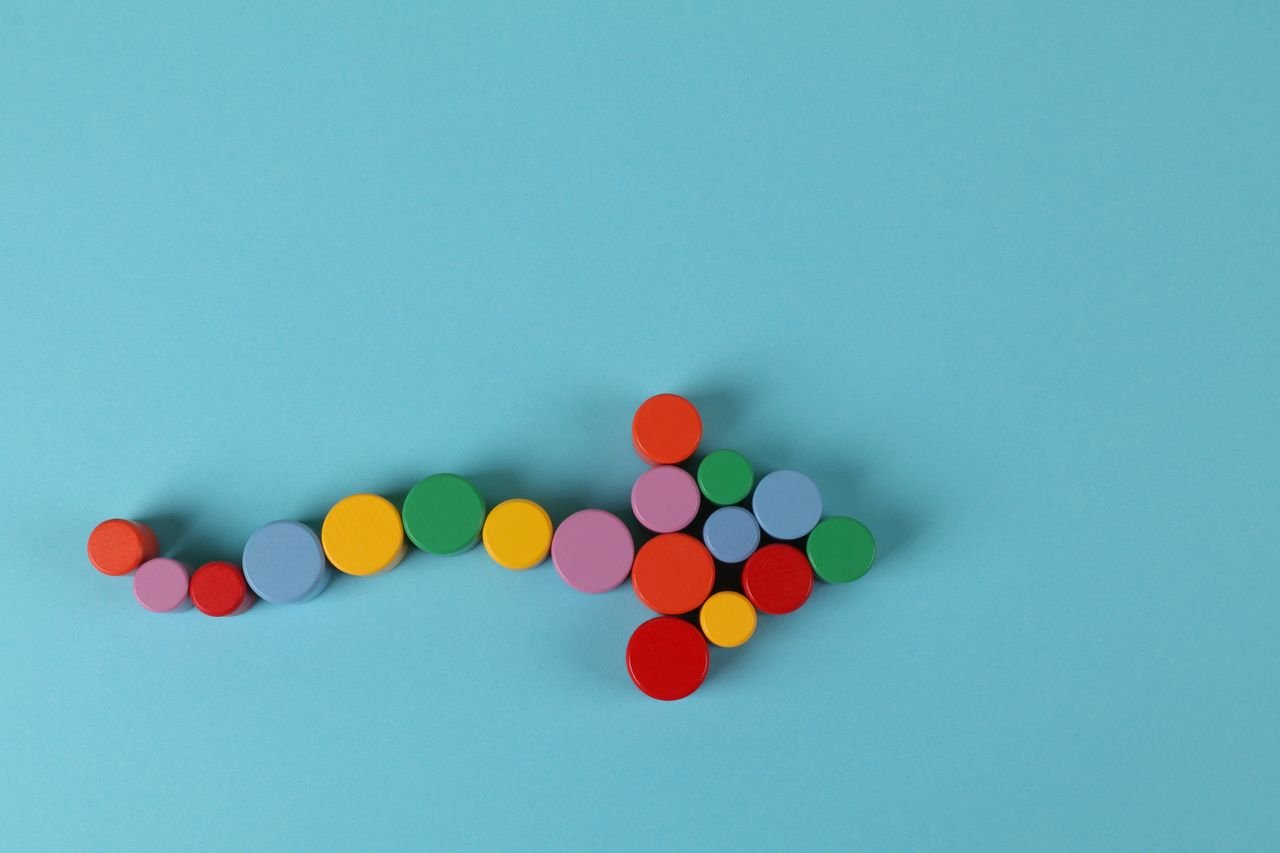

Constructed from the simplest elements, the geometry arrow integrates direction, accuracy, and meaning into a single mark. It is one of the most used symbols in human communication — appearing in interfaces, signage, diagrams, art, and data visualization. This guide explores what makes arrows work: their mathematical foundation, design principles, symbolic power, and practical checklist for creating them.
1. Foundation: Lines, Angles, and Vectors
At its core, a geometry arrow is mathematics made visible. It begins with a baseline — a line segment with direction — and terminates in an arrowhead defined by angles. In vector terms, it encodes both magnitude and direction in one glyph.
Every detail matters. Sharper, more acute arrowhead angles convey speed and precision; wider, blunter heads feel stable and friendly. The ratio of head to shaft changes the emotional register: a long shaft with a small head feels elegant and technical, while a bold head on a short shaft feels assertive.
2. The Design Principle: Guiding the Eye with Purpose
In graphic design, UX, and wayfinding, geometric arrows are essential tools for directing attention. A well-placed arrow eliminates ambiguity — it tells the viewer exactly where to look and what to do next.
Hierarchy and flow. On websites and apps, arrows lead users along a desired path. The “next” button, the checkout arrow, the scroll indicator — each is a small decision made effortless by a clear directional cue.
Aesthetic versatility. The geometry arrow adapts to any design language: minimal line icons, bold flat illustration, technical diagrams, or playful hand-drawn styles. Its simplicity is what makes it universal.
3. The Symbolic Dimension: From Ancient Art to Modern Metaphors
Beyond its practical use, the arrow carries deep symbolic meaning across cultures:
- Advancement and progress: An arrow pointing up or forward signals growth, ambition, and momentum.
- Focus and decision: At a crossroads, an arrow represents choice — committing to one direction.
- Conflict and protection: Crossed or broken arrows have long symbolized peace, alliance, or defense.
Designers who understand this symbolic layer can choose arrow forms that reinforce — rather than accidentally contradict — their message.
4. Digital Growth: Pixels, Actions, and Motion
The digital era reinvented the arrow. Once static, it is now interactive:
- The cursor: The most-seen arrow in the world — a direct digital pointer that translates hand movement into on-screen action.
- Micro-interactions: Modern arrows bounce, morph, and animate to acknowledge taps, signal loading, or celebrate completion.
- Data visualization: In dashboards and diagrams, arrows show relationships, flows, and causality between data points.
- AR wayfinding: Augmented reality navigation overlays arrows onto the real world, blending digital guidance with physical space.
5. Creating the Modern Geometry Arrow: A Design Checklist
When designing a geometric arrow, work through these considerations:
- Proportion: Balance the head and shaft. A head that’s too small gets lost; one that’s too large overwhelms.
- Negative space: The area around and within the arrow defines its clarity. Give it room to breathe.
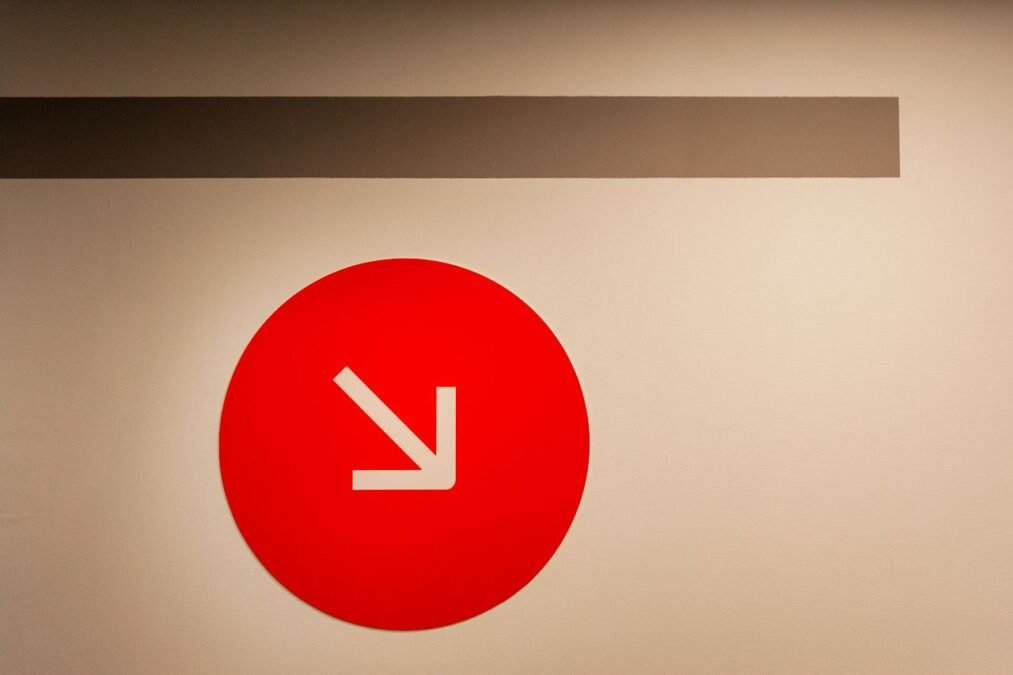
- Color and contrast: Color signals urgency and meaning — red for warning, green for go, brand colors for identity. Ensure sufficient contrast against the background.
- Context: An arrow for a road sign, a mobile app, and a data chart have different requirements. Design for the environment it will live in.
- Consistency: Within a single interface or brand, arrows should share the same visual language — same angles, weights, and corner treatments.
Designers looking for inspiration can browse how professionals handle arrows, icons, and wayfinding systems on ArtStation, where thousands of designers share their work.
Frequently Asked Questions
What is a geometry arrow?
A geometry arrow is an arrow constructed from basic geometric shapes — lines, angles, and vectors. It’s the foundation of directional symbols used in design, signage, interfaces, and data visualization.
Why are arrows so common in UX design?
Because they reduce cognitive load. An arrow tells users where to go or what happens next without requiring them to read and interpret text — making interfaces faster and more intuitive.
What makes a good arrow icon?
Clear proportions, appropriate weight for its size, sufficient contrast, and consistency with the surrounding design system. It should be recognizable at small sizes and unambiguous in meaning.
Conclusion: The Unwavering Guide
The arrow is one of humanity’s most enduring symbols — simple enough to draw in a second, powerful enough to guide decisions across cultures and centuries. Whether you’re designing an interface, a sign, or a diagram, respecting its geometry, context, and symbolism turns a basic shape into a precise communication tool.
you may also read our guide to Xiangaijiaqi.com and our explainer on Messonde.