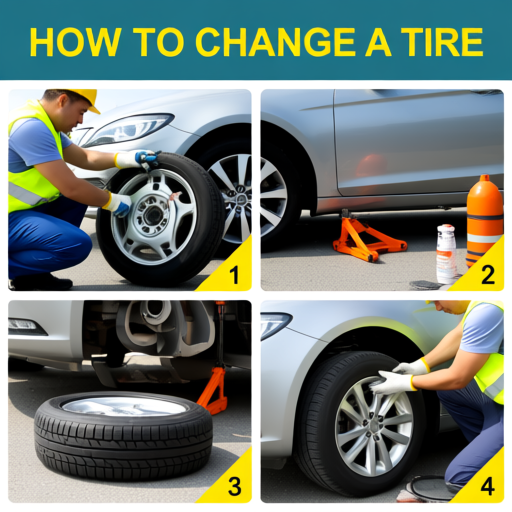
How to Change a Tire
Learning how to change a tire is a vital skill for all drivers. A flat tire is more a matter of when, not if. Tire problems can happen anywhere, whether it’s on a remote country road, a busy highway, or even your own driveway. While a flat tire can sometimes be stressful and inconvenient, problems with tires don’t have to be a big deal. If you have the correct information and tools and a calm, systematic plan, you can safely change the flat tire and replace it with your spare. This guide, about 1,200 words, is meant to help you gain the knowledge you need to handle this typical roadside emergency safely and confidently.
The Importance of Knowing How to Change a Tire
One of the most universal skills one should learn is how to change a car tire. Despite the age of mobile phone apps that let users call someone to ‘change a tire’ for them, the ability to change a tire remains a necessity. This is the case because one may be in a location without phone service, refuse to wait an excessive amount of time for help to arrive, or prefer the ability to work independently. Being able to change a tire saves an individual considerable time and money. This skill enables people to turn a panic-inducing situation into a more manageable task. In addition to the skills mentioned, one is more likely to understand their car in greater depth and become a more responsible driver.
Your Vehicle’s Safety Kit
The first part of learning how to change a tire is making sure your car is in good repair and that your vehicle is equipped for a roadside emergency.
Each vehicle is equipped with an initial set of tools kept in the trunk, under the floor mat. You should find and learn these:
Spare Tire: Often displayed as mini spares (also known as ‘donuts’). They are not as heavy or as wide as standard ones, and they are intended for a limited set of driving conditions (50 miles or less and under 50mph). Air pressure is critical; check it monthly to prevent the spare from becoming useless.
Jack: Every car has one, and it’s usually a scissor jack or a bottle jack designed for the weight of your vehicle.
Lug Wrench: This tools is used to tighten and loosen the nuts that hold the tire to the wheel hub. It is essential to have the correct size nuts for your vehicle.
Tips to Help You Stay Ahead of Maintenance:
Check your tires for visible signs of wear, deep cracks, or any objects wedged in the tread.
Tire pressure (PSI) is essential; you should know your vehicle’s recommendations (there is a sticker on the driver’s side door jamb) and check it monthly.
If you have the factory lug wrench, switch to a cross wrench or a breaker bar for added mechanical advantage.
Having a durable, bright flashlight, a pair of working gloves, and a reflective safety vest in your trunk is a great idea.
The Step-by-Step Process: How to Change a Tire Safely
This section outlines the procedure to follow in the event of a flat tire. Your safety comes first.
Step 1: Locate a Safe Area and Make Your Car Safe
What you do here is essential in avoiding a further crash.
Avoid a quick stop. Instead, ease off the accelerator, maintain a firm grip on the wheel, and slowly decelerate while activating the hazard lights.
If you can, drive to a level, hard, and stable surface before stopping. Good examples include a parking lot, a rest area, or a wide shoulder. Avoid off-camber ground, hills, and blind curve areas.
Once you have come to a stop, apply the parking brake.
If you have wheel chocks, use them. If not, you can use some timber or a large rock as a wedge on the wheel opposite the flat to prevent it from rolling. For instance, if the flat is on the front driver’s side, put a wedge on the back passenger tire.
Step 2: Get Your Tools Ready and Access the Flat Tire
Before raising the car, some other work must be done. The wheel has to be accessible.
Bring the spare tire, jack, and lug wrench to where you need to change the tire. Get these tools if you didn’t bring them previously. Check the car’s trunk to see if these items are inside.
If there is a hubcap or wheel cover, remove it using a flathead screwdriver or the flat end of a necessary lug wrench.
You should loosen the lug nuts, but do not remove them. Loosen each lug nut for a quarter to a half turn using the lug wrench in a counterclockwise position. You should apply some of your body weight to break the lug nut’s initial hold. This is best done with the wheel in contact with the ground to prevent it from spinning freely.
Step 3: Properly Jack Up the Vehicle
One of the most critical steps, but potentially the most dangerous in terms of making a mistake.
Refer to your owner’s manual for the specific reinforced jacking point for the flat tire. Usually, this location is a notched section of the frame or a particular point located behind the front wheel or ahead of the rear wheel. Do not ever attempt to jack the car on body panels, the axle, or the oil pan, as this can also lead to a hazardous situation.
Place the jack under the jack point. Only if the ground is soft should you put a solid, flat object (like a piece of plywood) on the jack for increased stability.
Slow and steady, jack up the vehicle until the flat tire is around 6 inches off the ground. This is a safe amount of distance to ensure clearance for the new tire.
Step 4: Remove the Flat and Mount the Spare
Once the vehicle is safely secured, complete the swap.
Finishing removing the hand-loosened lug nuts, and setting them safely in the hubcap or whatever is closest.
To remove the flat tire, pull it straight off the wheel studs. If it is heavy, do not be alarmed. Once removed, immediately place the flat tire on its side, under the vehicle’s frame, and near the jack. Flat tires are heavy, and this is an essential safety precaution. If the jack were to slip, the car would fall onto the flat tire rather than onto you or the ground.
Once flush, lift the spare tire and align it straight onto the wheel studs, and fully push it onto the hub.
Step 5: Secure the Spare and Lower the Vehicle
To secure the new wheel, the process is to do the opposite.
Begin by hand-tightening the lug nuts onto the studs, tightening them all until the wheel is securely fastened to the hub. This is also important, as it evenly seats the spare.
Next, lower the vehicle slowly using the jack, and let the spare touch the ground, but do not hold the weight, so you can tighten the lug nuts without spinning the wheel.
In the lug nut’s star or crisscross application sequence, hand-tighten only to avoid damaging the wheel. Look for any hints of wheel warping, then complete the lowering step. This step ensures the wheel sits as designed without applying excess pressure. Be sure to complete the star sequence before lowering the jack completely. You may use your full body weight at the end to give it one final, completely tight push. Repeating the tightening sequence will ensure that no collective shifting occurs that may allow the lug nuts to loosen, shifting the repaired wheel to an unseated position.
Step 6: Final Procedures and Post-Change Protocol
Once completed, you will be back on the road. First, complete the critical steps defined for you.
Confirm the previous step is complete before replacing the covering that the spare is outfitted with, if any.
Safely stow any items and equipment, including the flat tire that has been replaced, jack, and wrench, to ensure the items cannot be interacted with while you are in motion.
If you have the tool to complete it, check the spare tire pressure.
Once the steps are complete, you can drive again. You must be cautious about the tire’s speed, as all temporary spare tires are limited in speed.
Remember to avoid high-performance driving on the repaired spare tire, as it has a temporary limitation that can lead to dangerous driving. It is recommended that you avoid all extreme driving behavior, including taking a direct route to a repair shop for proper tire replacement or repair of a flat tire, and braking. Others may complete the replacement of the flat tire, but they need to regularly check the lug nuts to ensure they remain at the recommended crowning pressure with a wheel lug torque wrench.
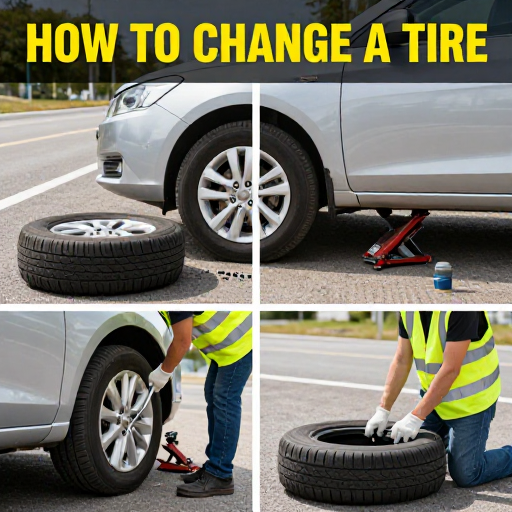
Advanced Tips and When to Call for Help
This guide explains how to change a tire in most passenger vehicles. However, there can be exceptional situations that may arise.
Rusted or Stuck Lug Nuts: Soak the nuts in penetrating oil (e.g., WD-40). Note: Never use an impact wrench to tighten lug nuts. Only use it to loosen them.
Aftermarket Wheels: You may need a special lug nut key to remove the wheels. Keep this key with your spare tire kit.
Know When to Call for Help: You should call for professional roadside assistance if you’re on a dangerous stretch of road, in extreme weather, if you’re physically unable to change the tire, or if the wheel is damaged/seized. Your safety is the number one priority.
Conclusion: Confidence Born from Preparedness
Learning how to change a tire is a key facet of responsible driving. Knowing how to do such a task is an excellent source of peace of mind. The first step to changing a tire is to practice doing so on a relaxed basis. Make sure to review your vehicle’s jack points and tools, and practice building your “muscle” memory. This practice makes a person more skilled at such a task, allowing them to do it more readily in high-pressure situations. Using this guide, a person is not just learning to change a tire but also learning to be more self-reliant in and out of a vehicle, working to keep those on the road safe. The objective of the task, however, is not simply to change a tire, but to do so safely and move on down the road.
you may also read nowitstrend.
About the Author