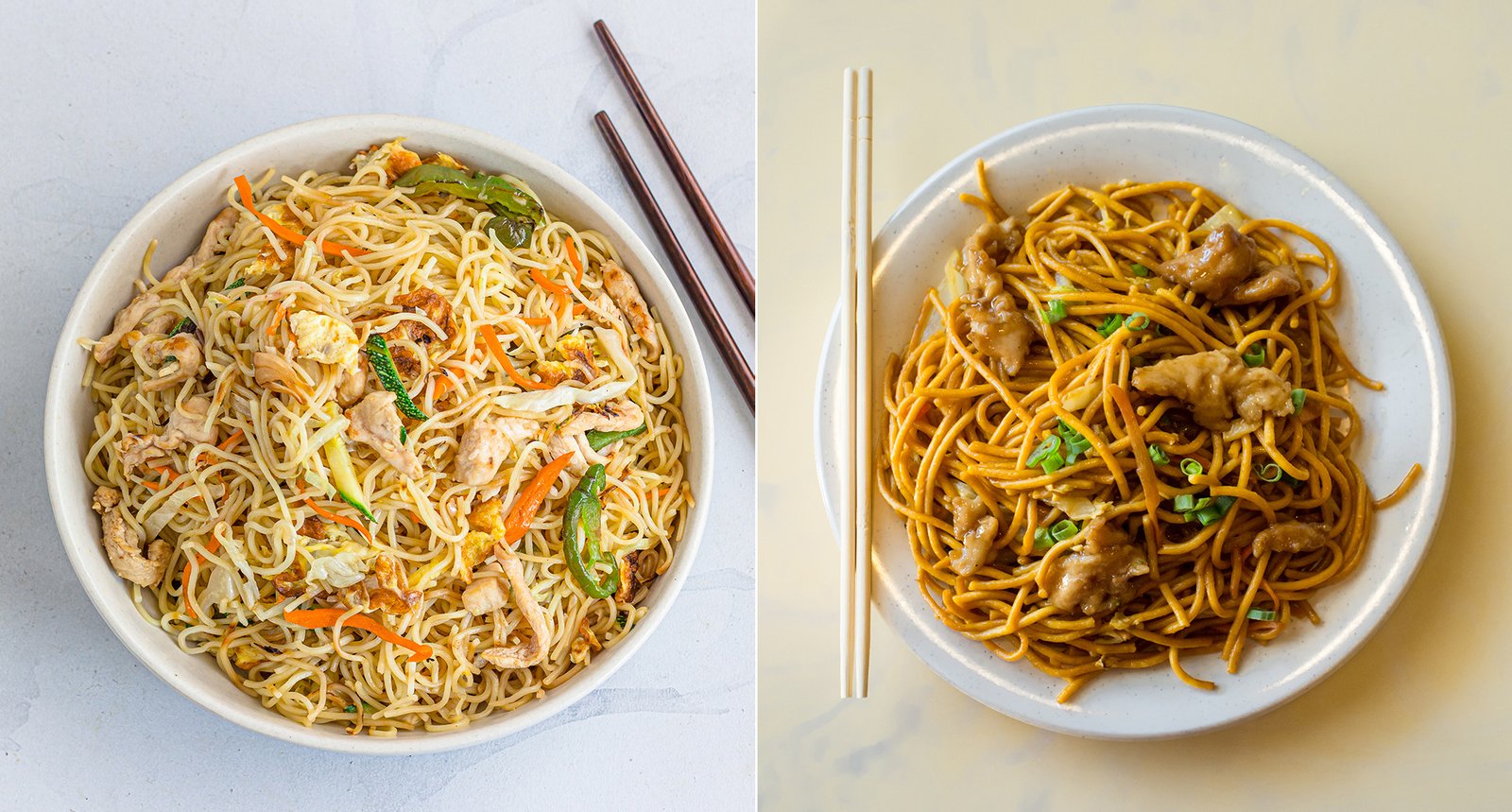
chow mein vs lo mein
Let’s be honest — when you open a Chinese takeout menu, your eyes scan the noodle section, and there they are: chow mein and lo mein. They look similar. They sound similar. They even come with the same veggies and proteins half the time. So what’s the actual difference? And more importantly — which one should you order tonight?
If you’ve ever flipped a coin to decide between the two, you’re not alone. The chow mein vs lo mein debate has confused diners for decades. But once you understand what’s really going on behind the scenes, you’ll never look at your noodle bowl the same way again.
It All Starts With the Name
Here’s the first clue: the names themselves tell you everything.
- Chow mein comes from Cantonese and means “fried noodles.”
- Lo mein translates to “tossed noodles.”
That’s not just menu poetry — that’s the entire cooking philosophy in two words.
Chow mein is a stir-fry lover’s dream. The noodles get boiled just until they’re soft enough to work with, but then they hit a hot, oiled wok and get fried until they turn golden and crispy around the edges. The vegetables, meat, and a light sauce are tossed in afterward, but the real hero here is that crunchy, slightly charred noodle texture.
Lo mein, on the other hand, is for the sauce enthusiasts. The noodles are boiled all the way through — soft, bouncy, and fully cooked. Then they’re taken off the heat, and later tossed with a rich, savory sauce and already-cooked toppings. No frying. No crispiness. Just pure, saucy comfort.
Texture Talk: Crunchy vs Silky
This is where the chow mein vs lo mein battle really gets interesting.
If you bite into a good chow mein, you’ll notice two things:
- The edges are crispy, almost like a fried snack.
- The center is still chewy and satisfying.
That contrast — crunchy outside, tender inside — is what makes chow mein so addictive. It’s also why it holds up well even if you don’t eat it immediately. That crunch stays with you.
Lo mein is a completely different mood. It’s soft, silky, and slurp-worthy. Every strand is coated in a glossy, umami-rich sauce that clings to the noodle like it was meant to be there. There’s no crunch here — just pure, comforting chewiness that feels like a warm hug in a bowl.
So if you’re in the mood for texture and bite, chow mein is your pick. If you want something saucy and soul-soothing, lo mein wins every time.
The Sauce Situation
Let’s talk sauce, because this is where many people get confused.
Chow mein uses a very light sauce — think soy sauce, oyster sauce, a little sesame oil, and maybe some broth. But it’s minimal. The goal isn’t to drown the noodles; it’s to enhance the fried flavor without making them soggy. A dry-ish noodle is a good noodle in chow mein land.
Lo mein, however, is swimming in sauce — in the best way possible. The sauce is thicker, richer, and more generous. It’s made with similar ingredients — soy, oyster, garlic, sugar — but in larger quantities. The noodles soak it all up like sponges, which is why every bite of lo mein bursts with flavor.
So if you’re the kind of person who loves extra sauce with every bite, lo mein is your soulmate. If you prefer a lighter, more savory kick without the mess, chow mein is calling your name.
The American Twist (Because Yes, It’s Different Here)
Here’s where things get a little tricky. In many American-Chinese restaurants, the lines between chow mein and lo mein have blurred.
Some places serve what they call “chow mein” but it’s actually closer to lo mein — soft noodles with a bit of sauce, just stir-fried briefly. Others offer a “crispy chow mein” where the noodles are pressed into a pancake-like patty, fried until crunchy, and then topped with a saucy meat-and-veg mixture. That version is more old-school and absolutely delicious.
And then there’s the “steamed chow mein” which is basically what most of us know as regular chow mein — fried briefly and tossed with ingredients.
So if you’re ordering in the U.S., it helps to ask: “Is your chow mein crispy or soft?” That one question will save you from any surprises.
Which One Should You Order?
Here’s the honest truth: there’s no winner in the chow mein vs lo mein debate — only personal preference.
Order chow mein if:
- You love crispy, crunchy textures.
- You prefer a lighter, less saucy dish.
- You want that smoky wok flavor (called wok-hei).
- You’re eating it later and don’t want it to get mushy.
Order lo mein if:
- You’re all about rich, savory sauces.
- You love soft, chewy noodles.
- You want every bite to be packed with flavor.
- You’re craving something comforting and hearty.
Final Bite
The chow mein vs lo mein showdown isn’t about which dish is better — it’s about which dish fits your mood. Both are classics. Both are delicious. Both deserve a spot in your regular takeout rotation.
Next time you’re staring at the menu, don’t stress. Just ask yourself: Do I want crispy and savory, or soft and saucy? That one answer will guide you straight to noodle heaven.
And hey — if you still can’t decide, there’s no rule against ordering both. Life’s too short to choose just one noodle.
you may also read nowitstrend.
About the Author